The Body Becomes Collage
Status: in progress
Cove Park Autumn Micro Residency
October 2026
Line of Inquiry: When Eve Left The Scene
Body · Frame · Trace · Spatial Collage
Overview
When I began exploring the idea of Eve leaving the image in which she had been represented, I found myself thinking about what she might leave behind.
A body can leave a frame, a place, or a scene. But images, documents, recordings, gestures and other traces may remain. And once the body is no longer there, who decides what matters, how those traces are arranged, and what story they begin to tell?
Would the same fragments tell a different story if someone placed them differently?
These questions led me towards the idea of spatial collage. I wanted to take fragments and images beyond a fixed surface, into a space where their relationships could change through movement, light and the presence of a living body.
I began experimenting with this idea during my residency at Cove Park in October 2026, continuing questions that had emerged through Refusal to Remain Visible at Hospitalfield.
01. Frames, Shadows and the Living Body
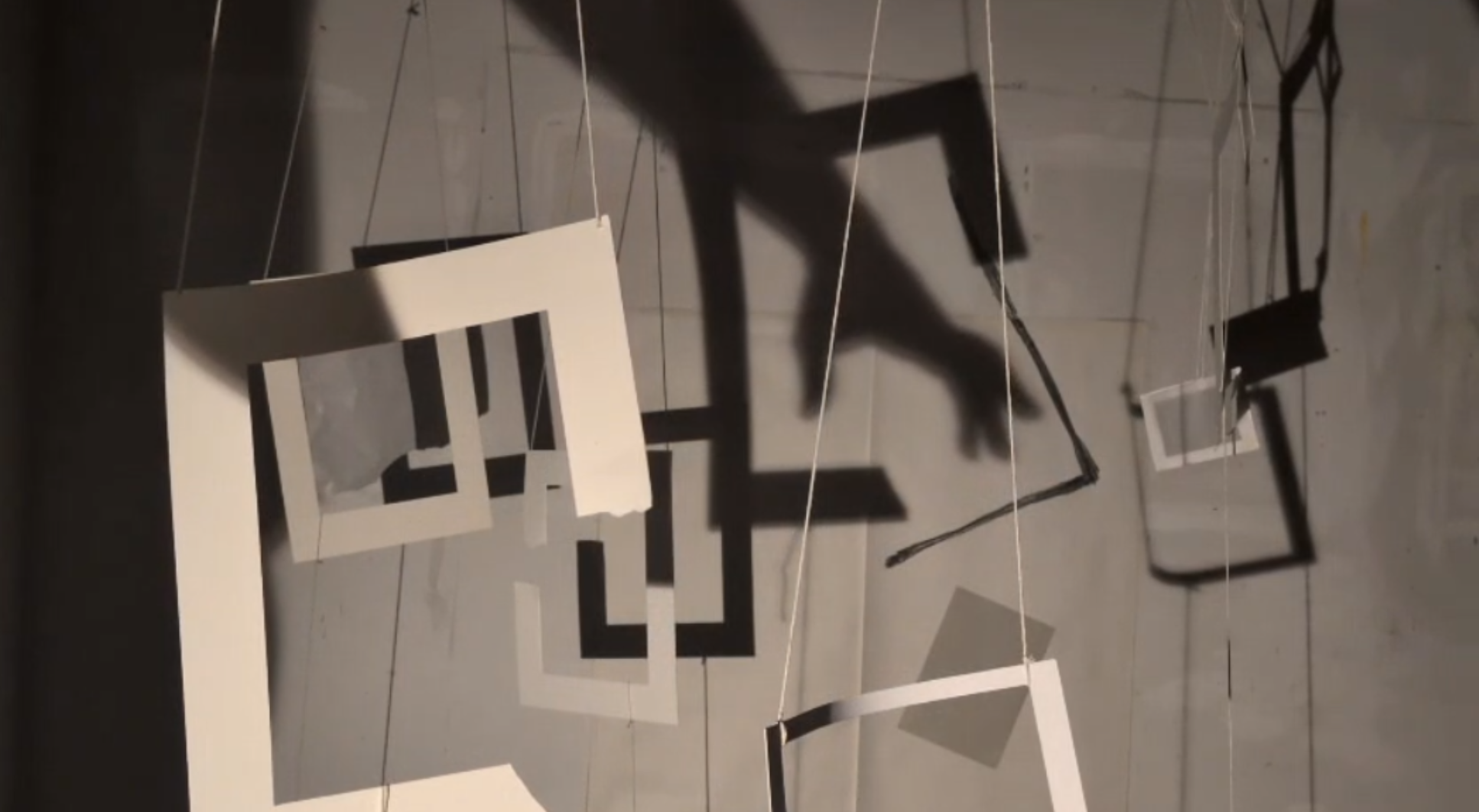
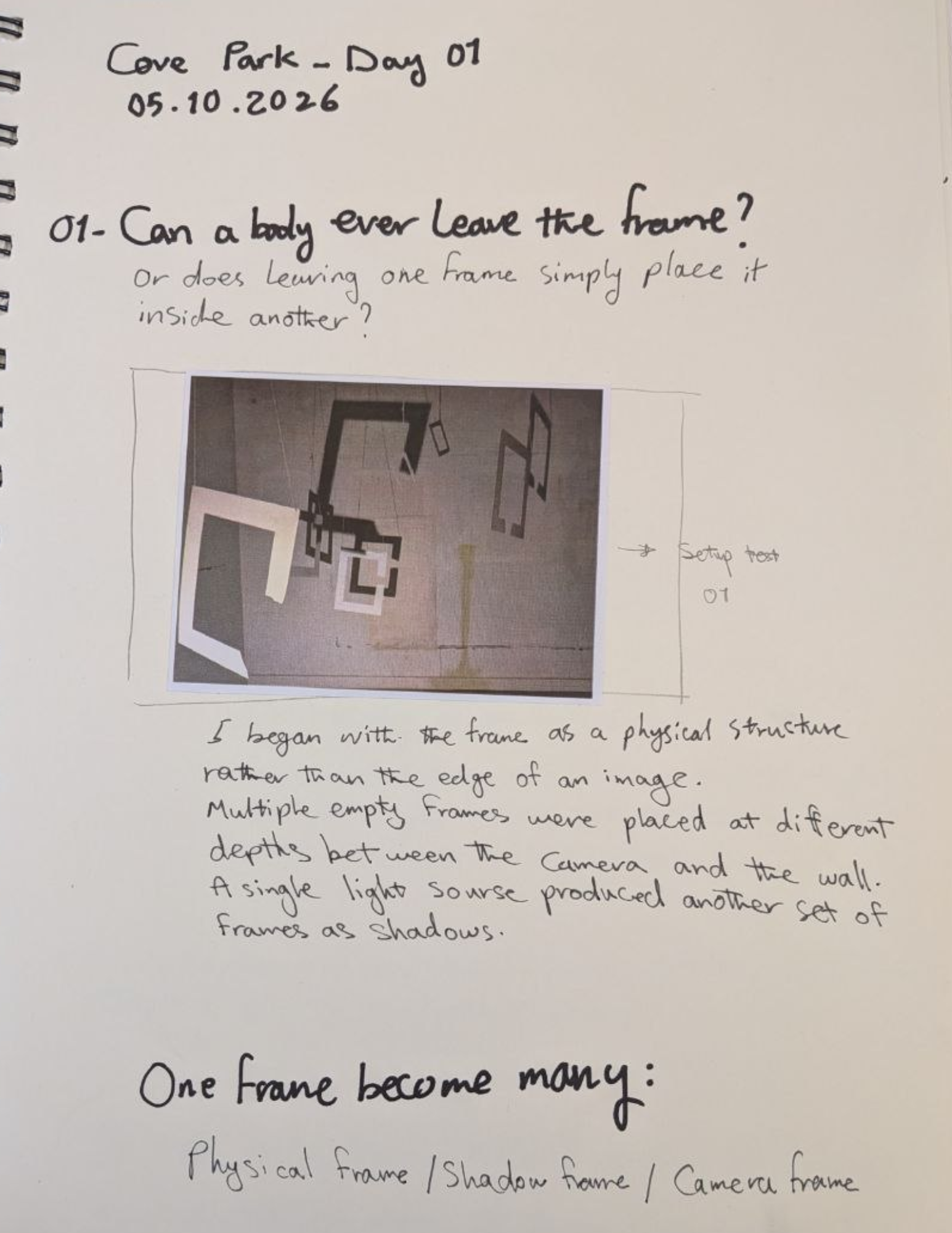
I started with empty paper frames suspended at different depths. With a single light source, the frames multiplied into physical frames, shadow frames and the frame of the camera.
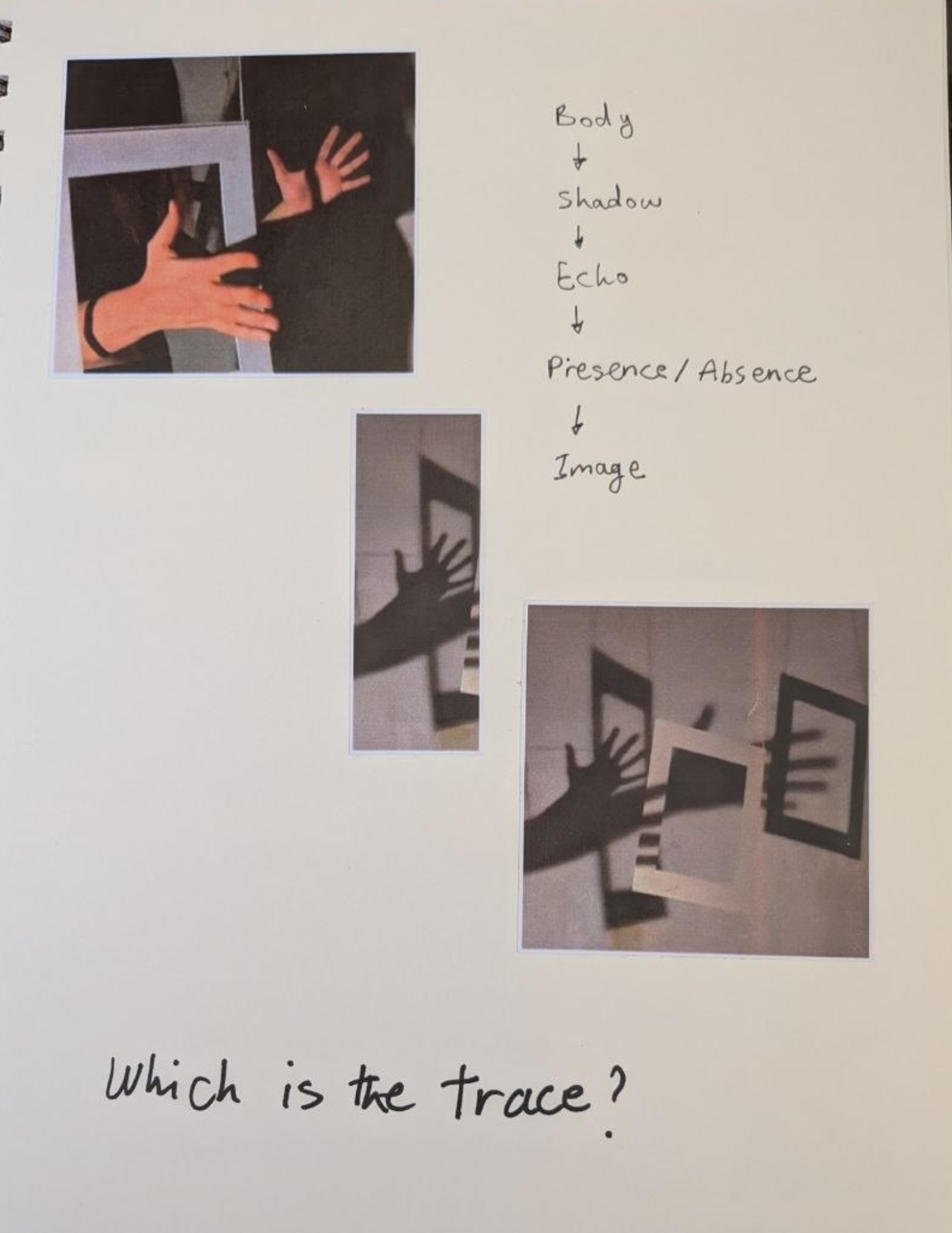
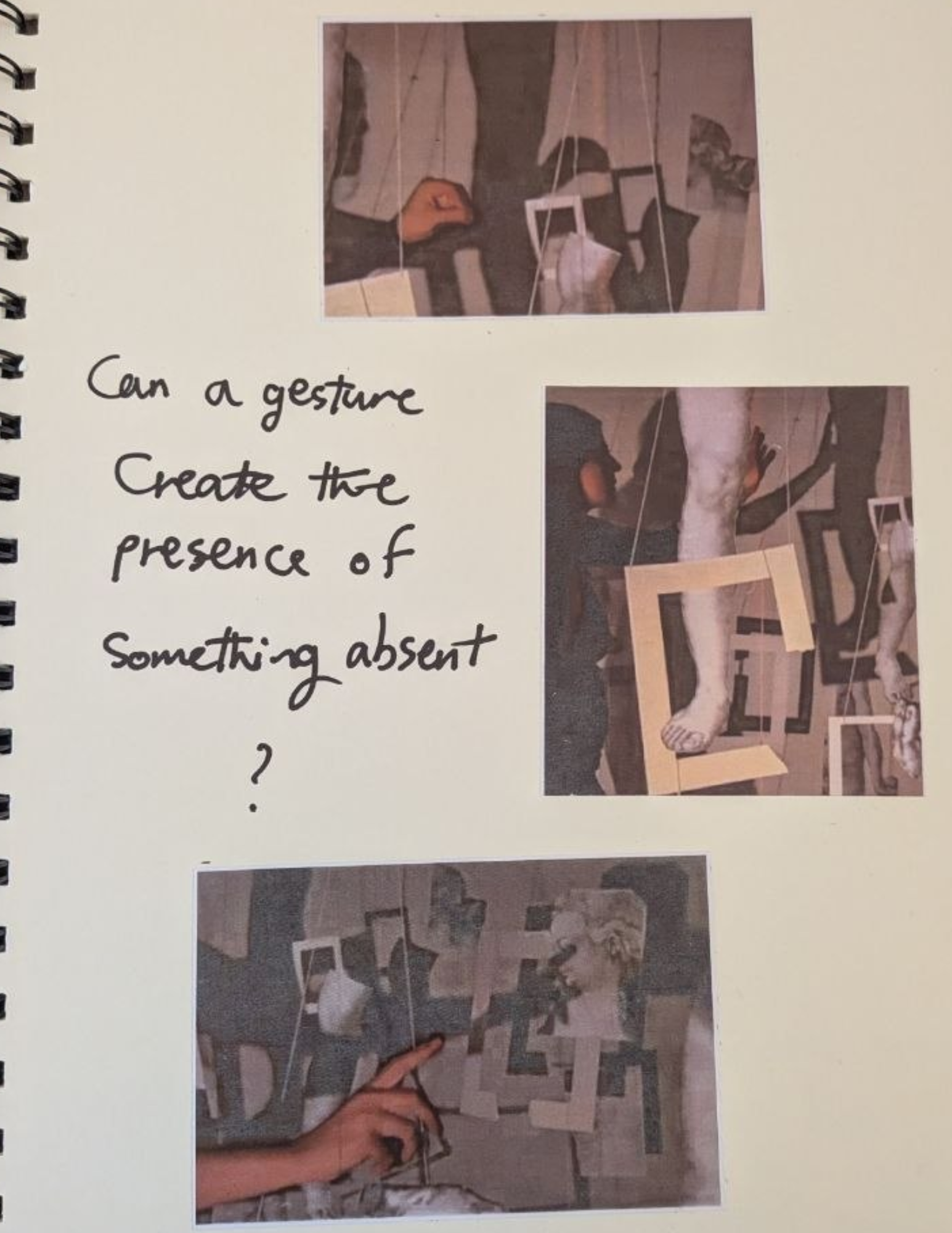
When I entered the arrangement, my body seemed to multiply too. My hand, its shadow and its recorded image appeared in different places, sometimes belonging to several frames at once.
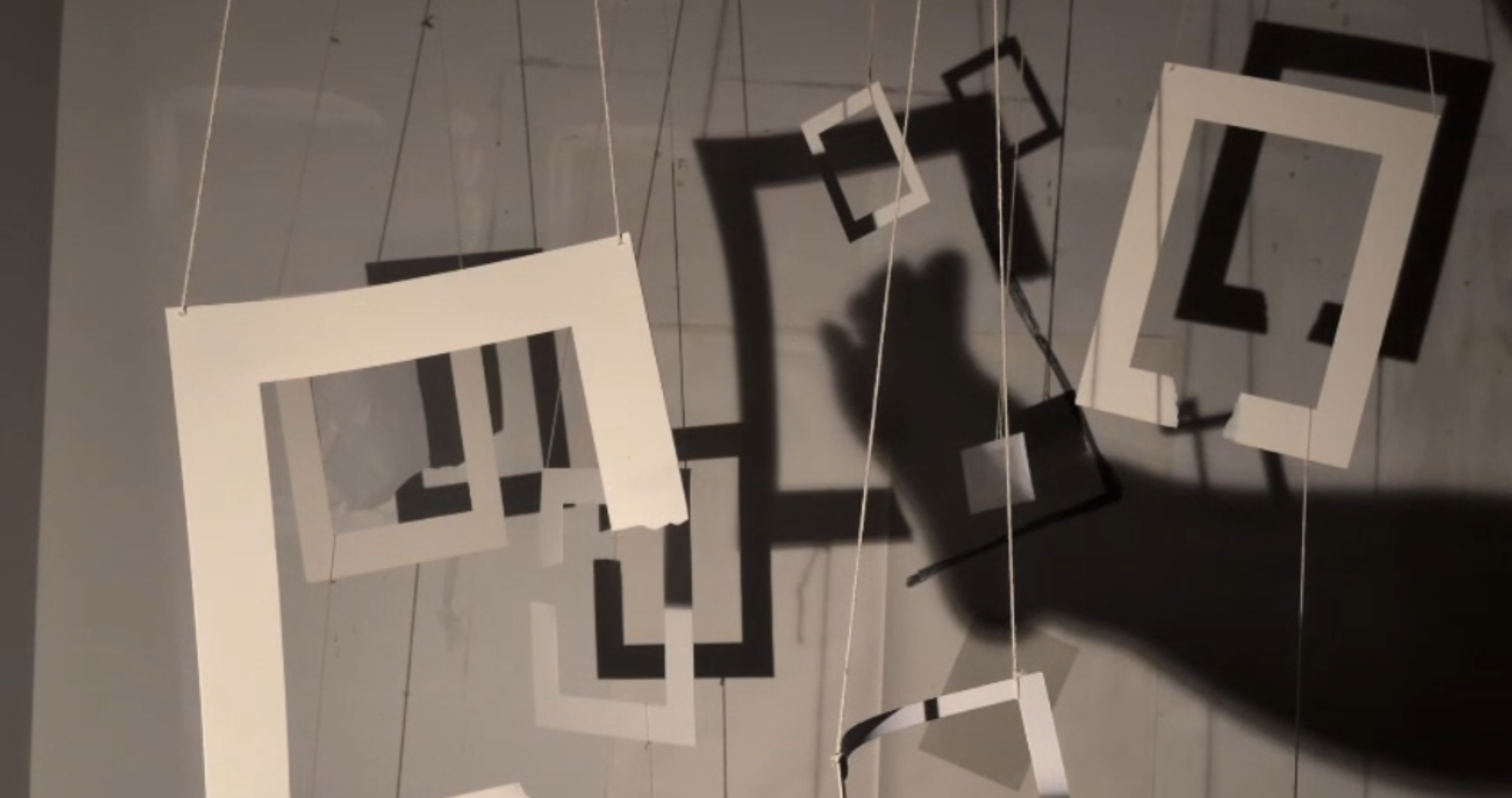
Can a body ever leave the frame? Or does leaving one frame simply place it inside another?
02. Presence, Absence and What Remains
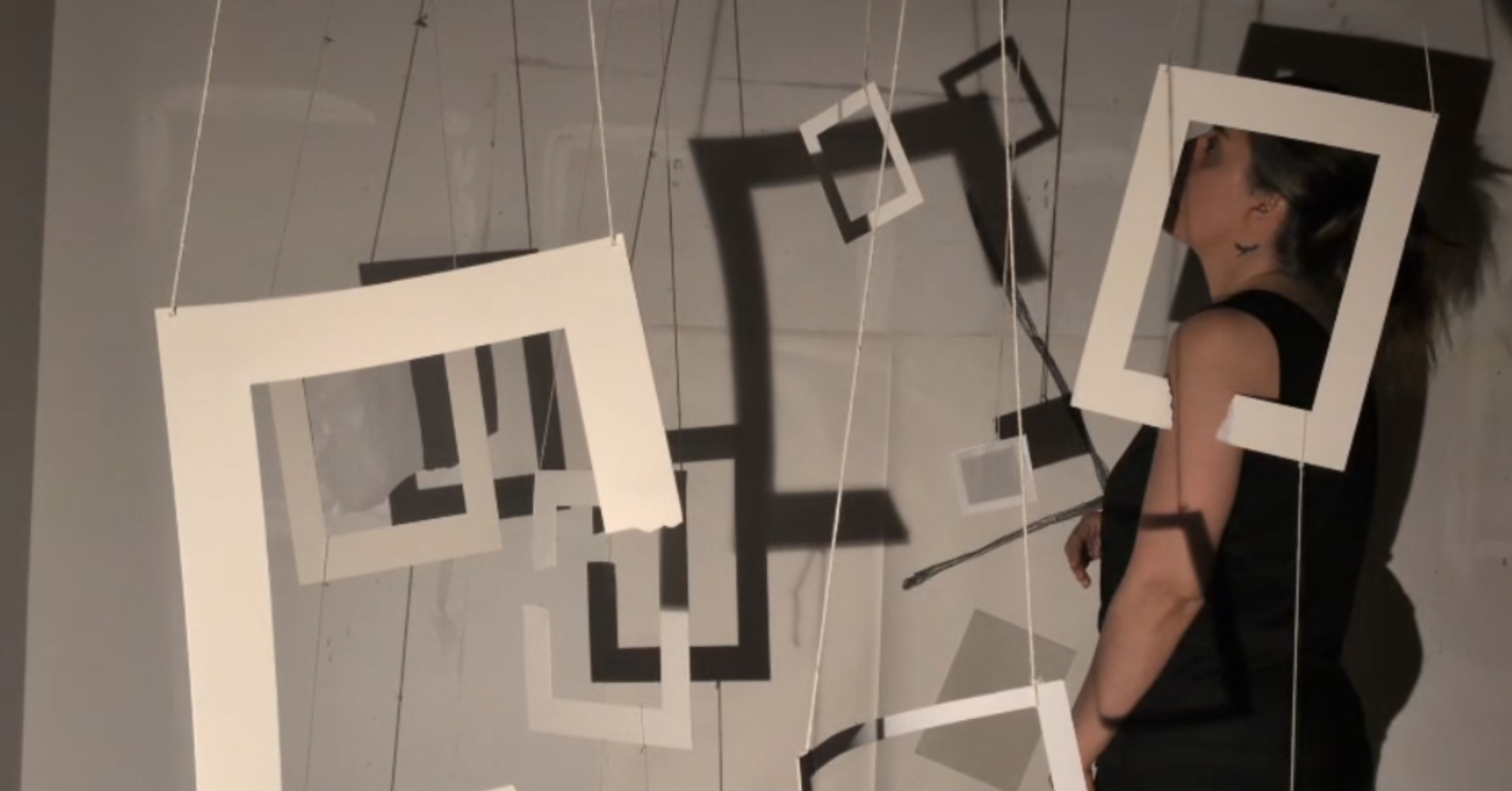
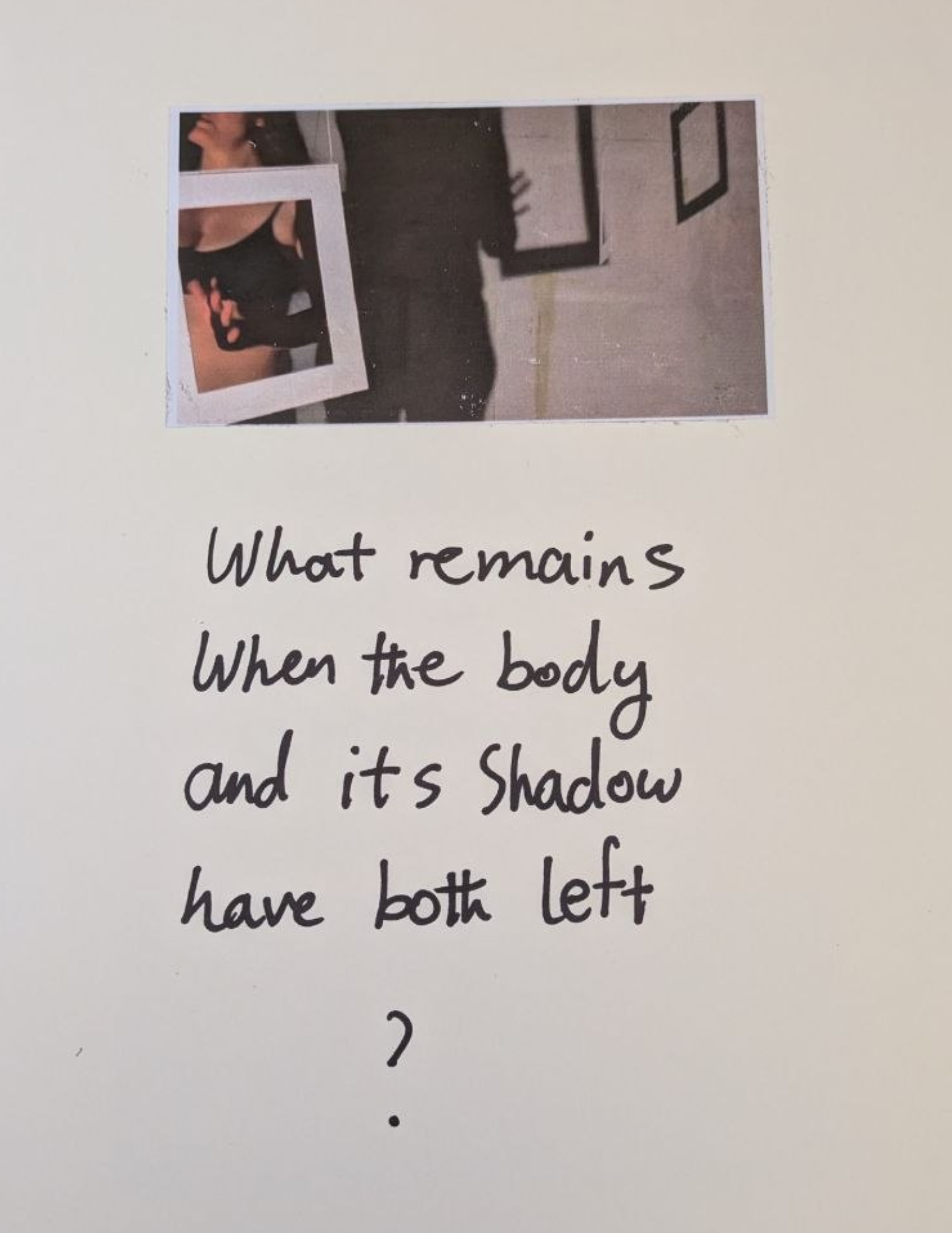
I experimented with staying, moving and leaving. Sometimes I remained almost still; sometimes I moved between frames or carried one with me.
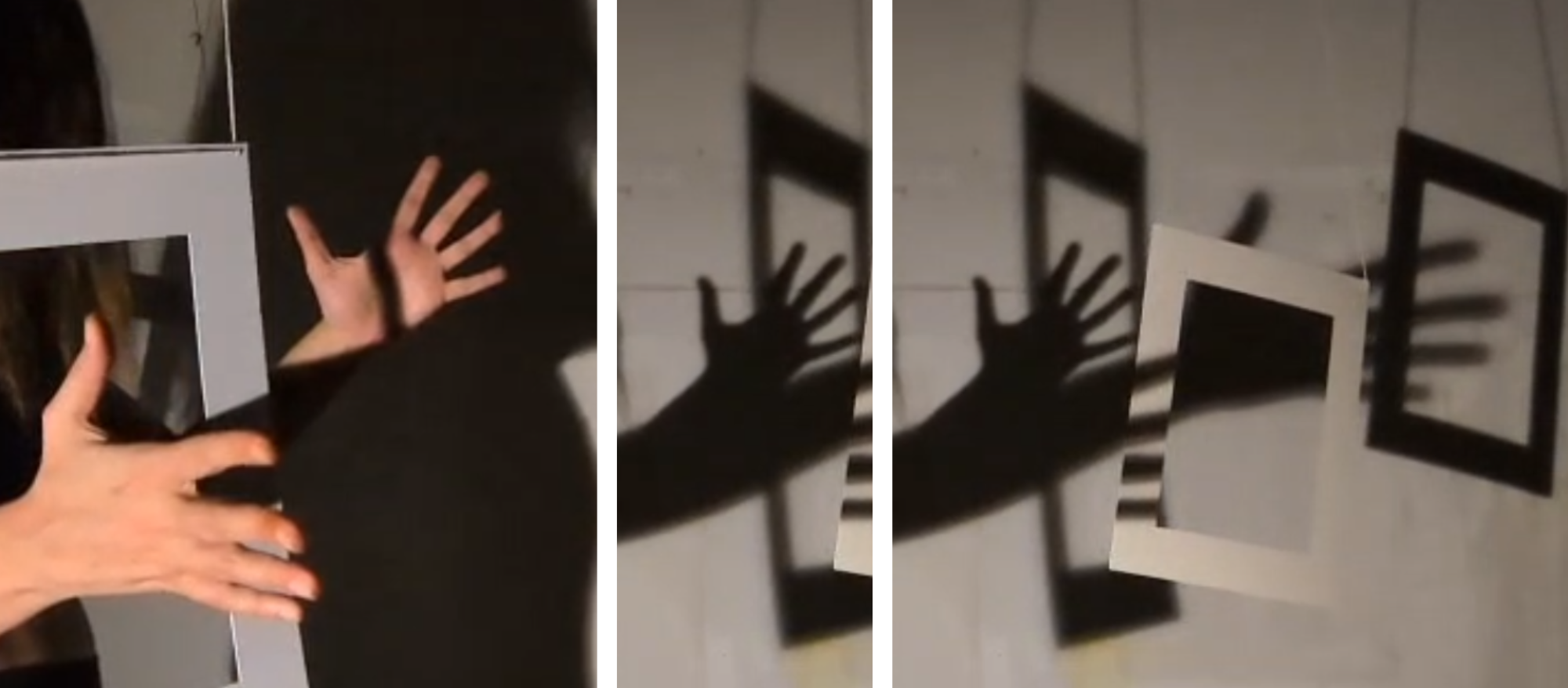
Looking back at the recordings, I noticed that the body and its shadow didn't always disappear together. A shadow could continue to move after the body had left the camera's view.
This made me question whether a trace is necessarily something that remains still, or even something that survives the presence that produced it.
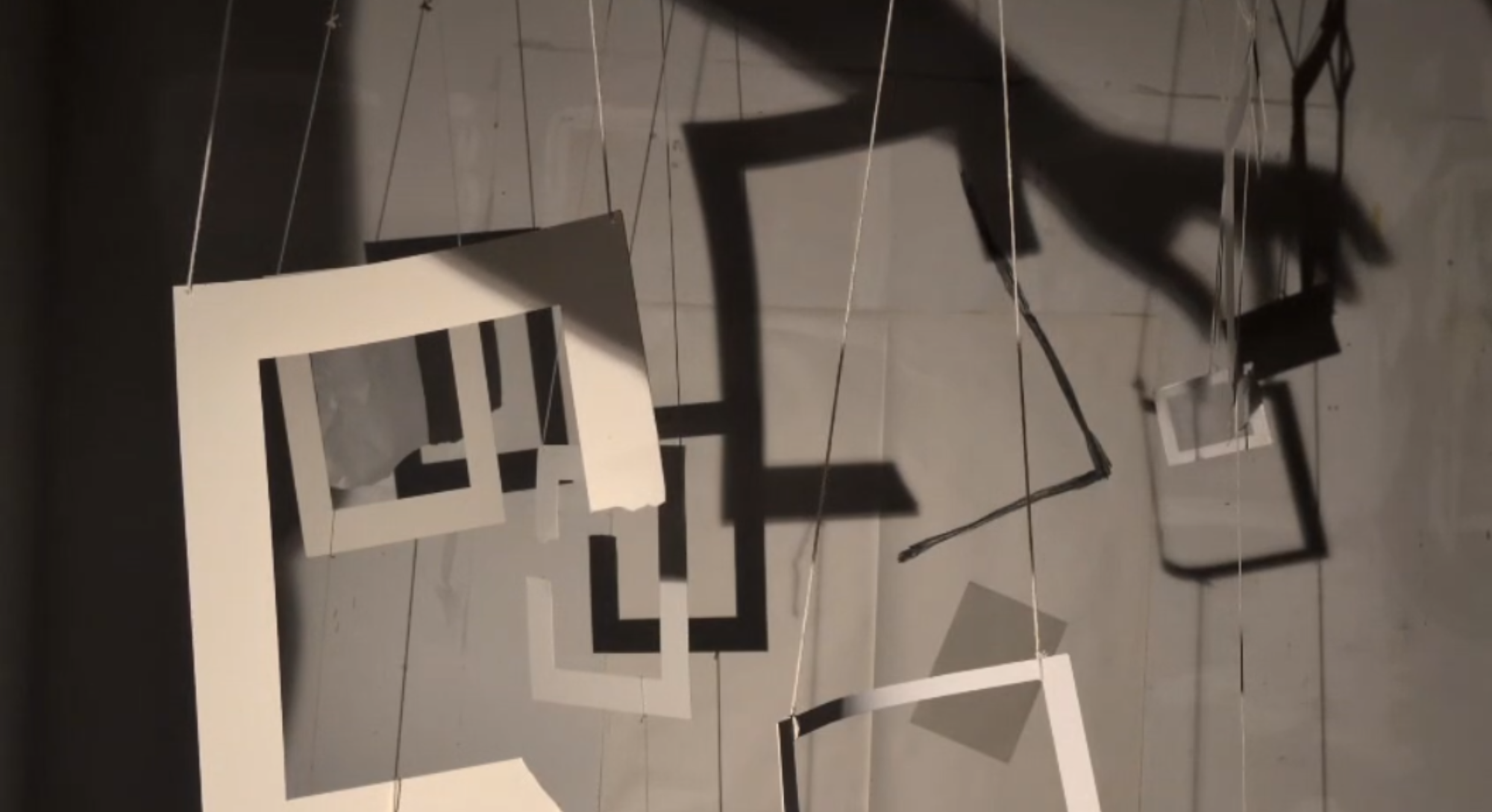
Could a trace be a delayed presence?
03. When the Traces Return
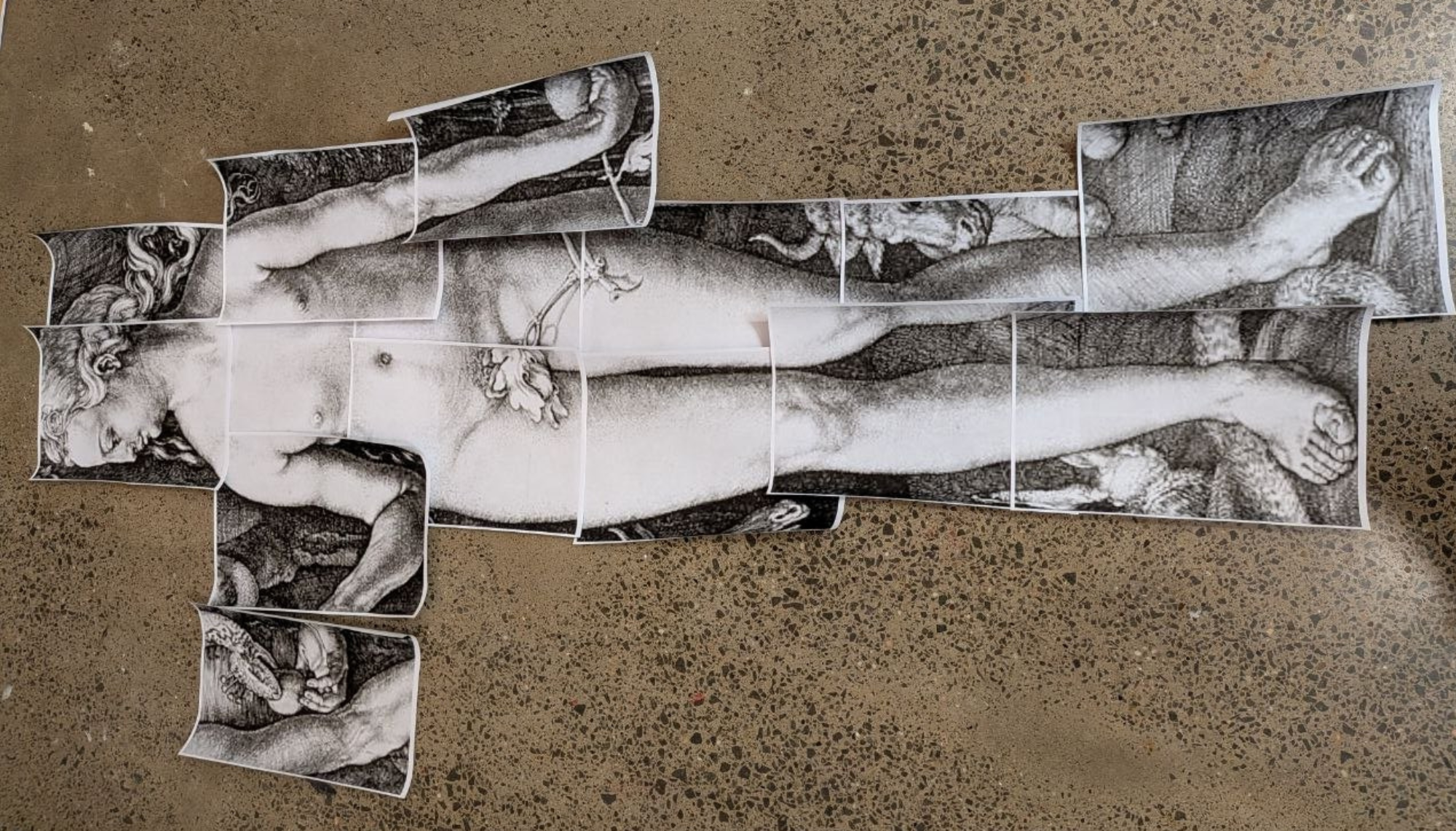
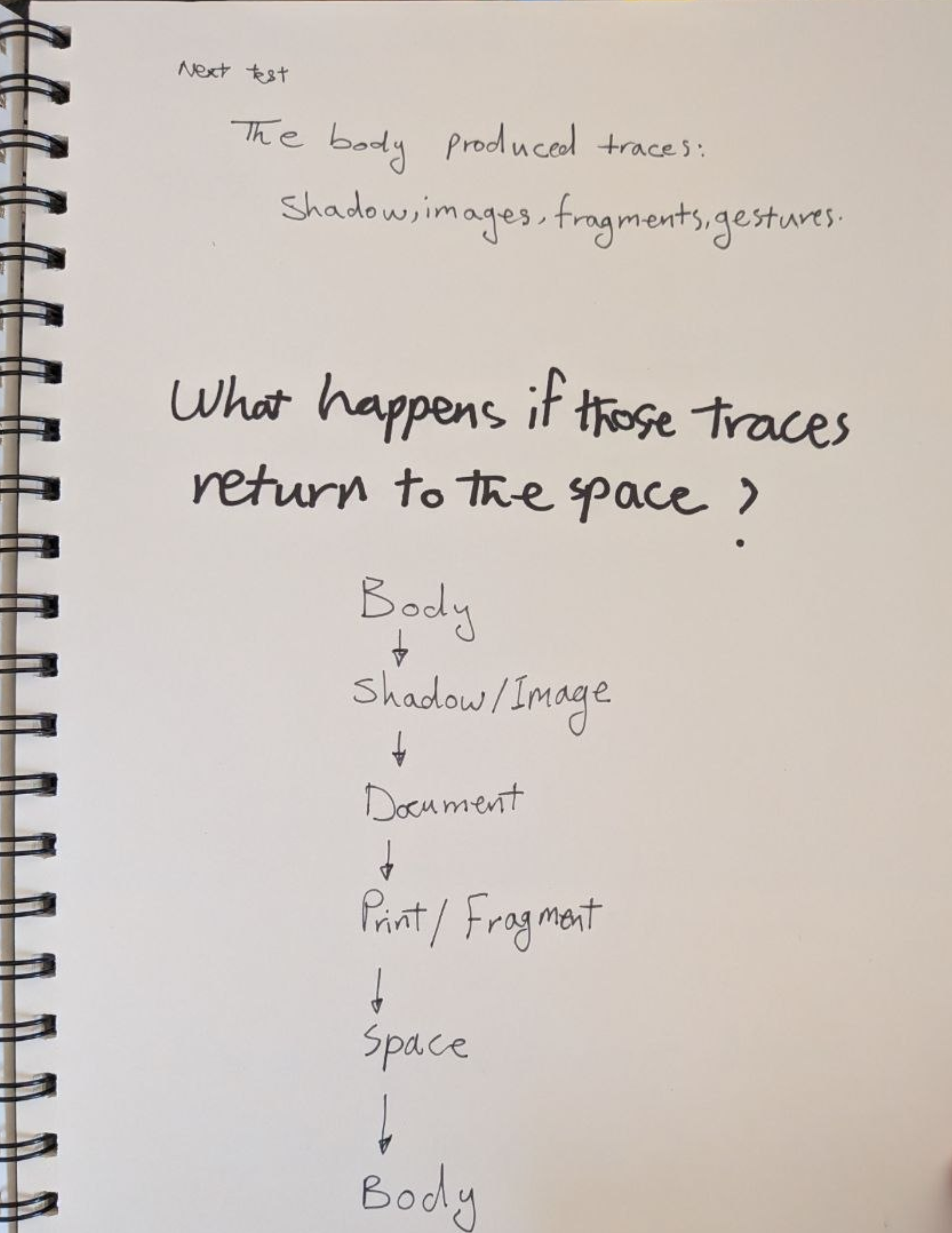
I began wondering what might happen if the traces of an absent body returned to the space.
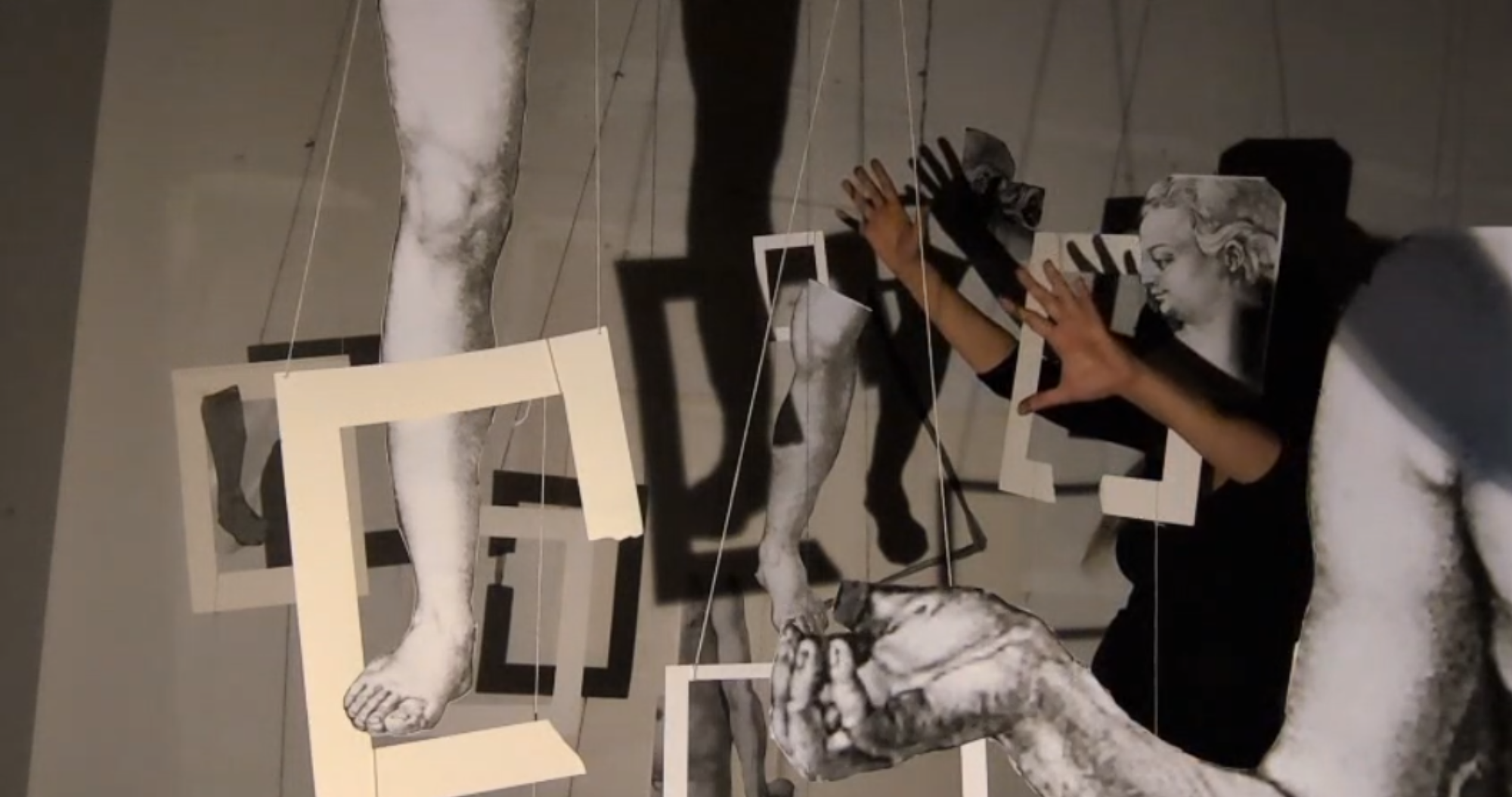
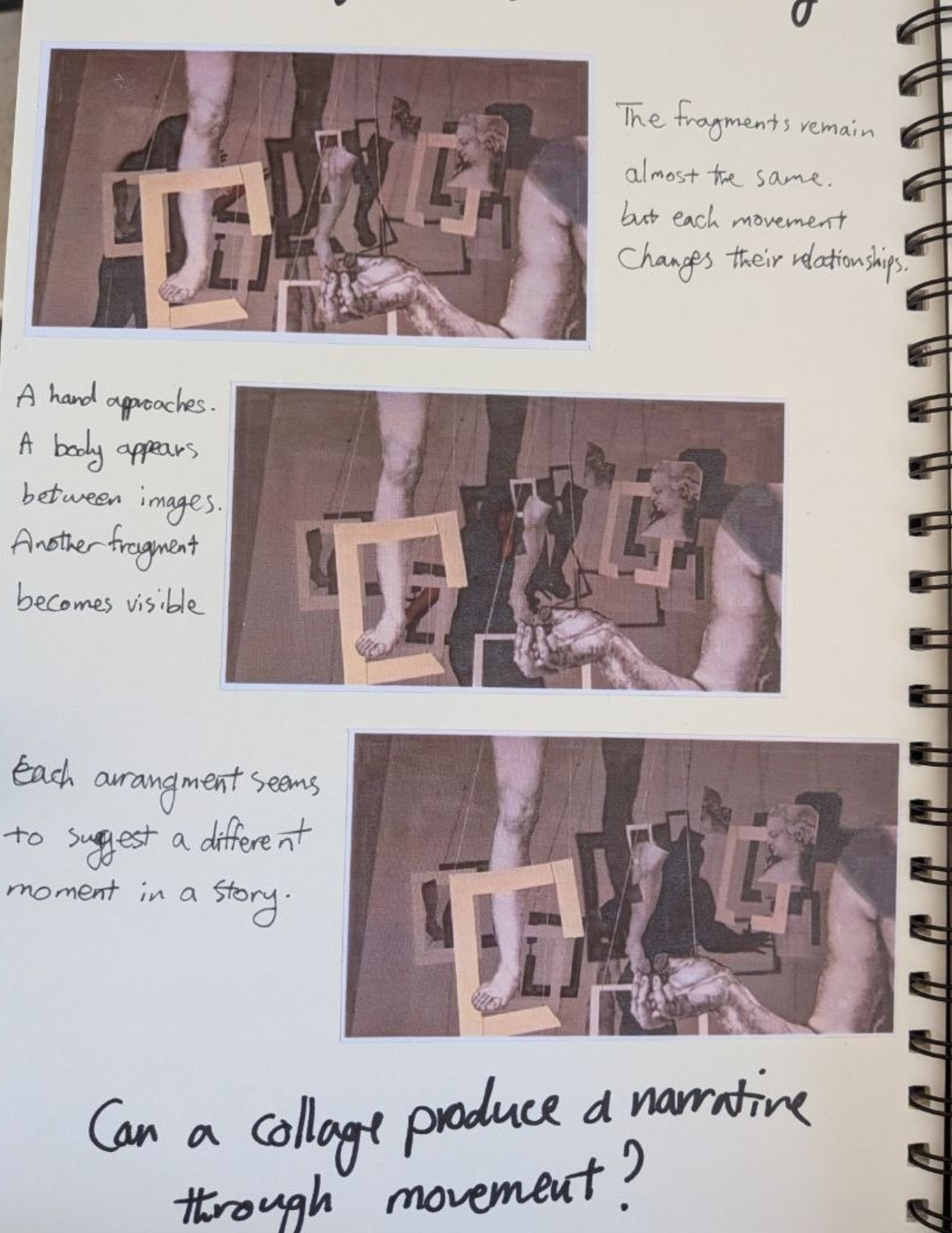
I brought in printed fragments from historical representations of Eve, separating the body that once occupied a single image and suspending its parts among the frames and shadows.
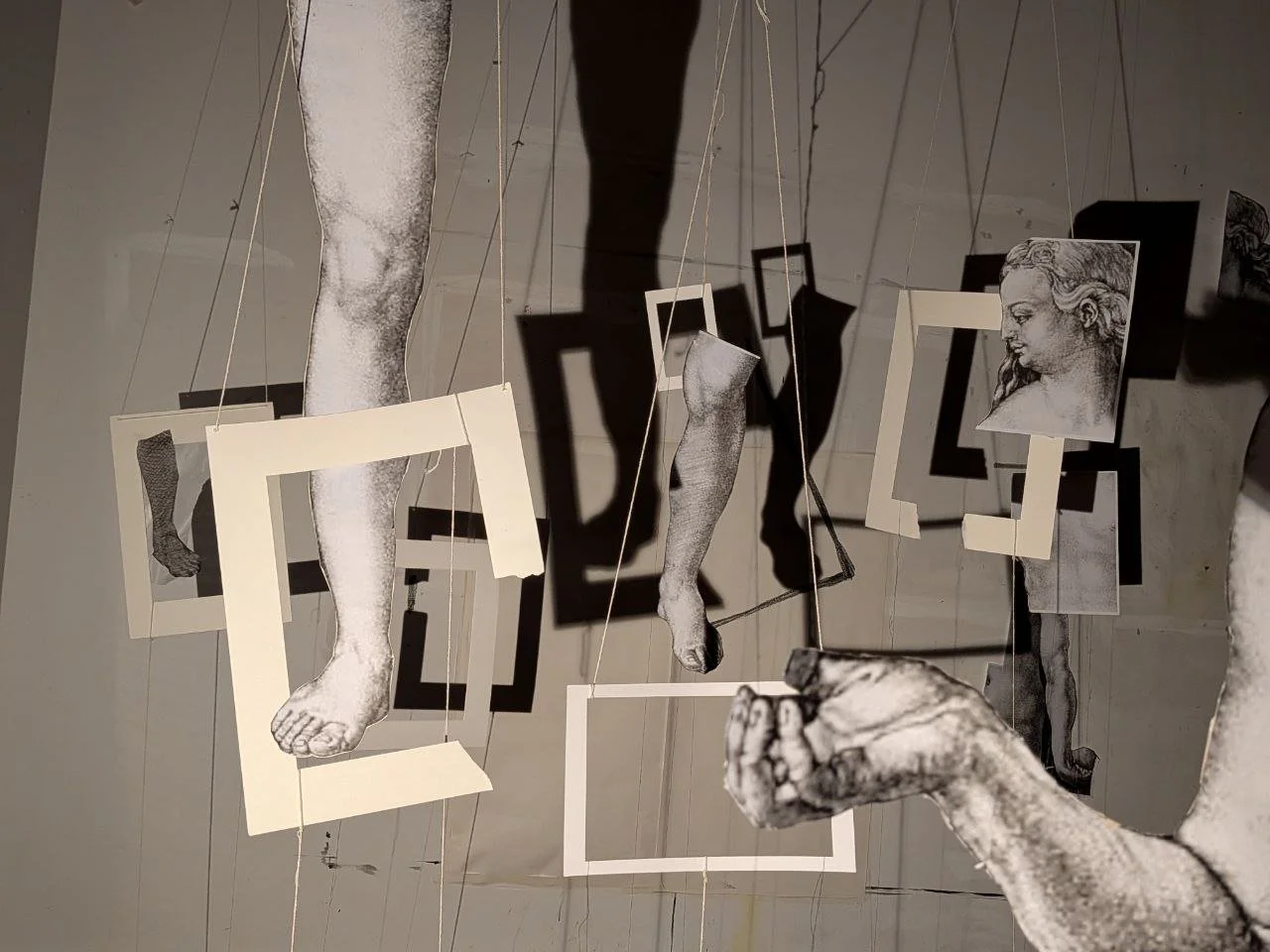
These were not traces of my own body, but fragments of images through which Eve's body had already been represented and interpreted.
A hand, a leg or a face could now appear in different relationships with other fragments, with the frames, or with the empty spaces between them.
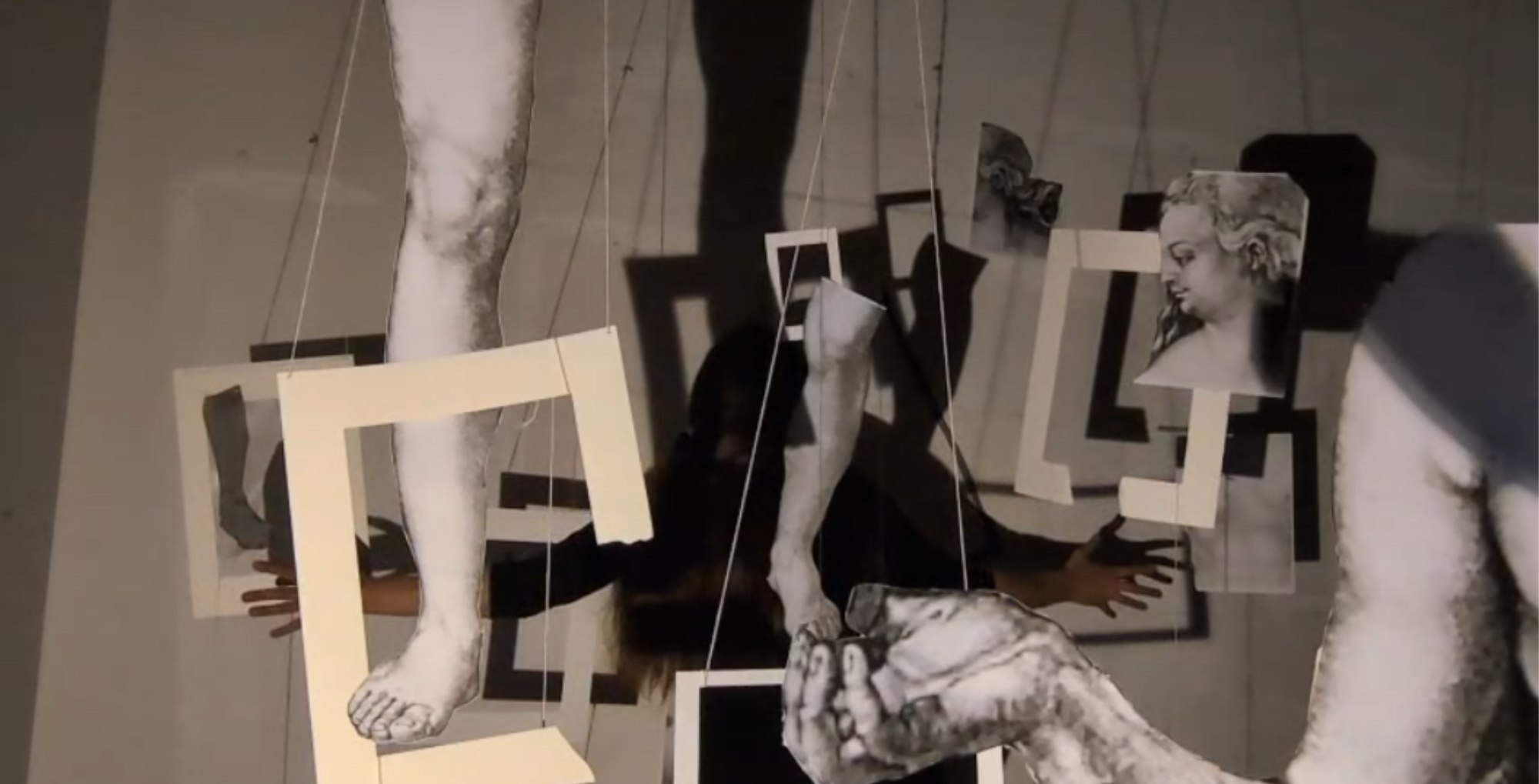
Can a fragmented image become a body in space?
04. The Body Becomes Collage
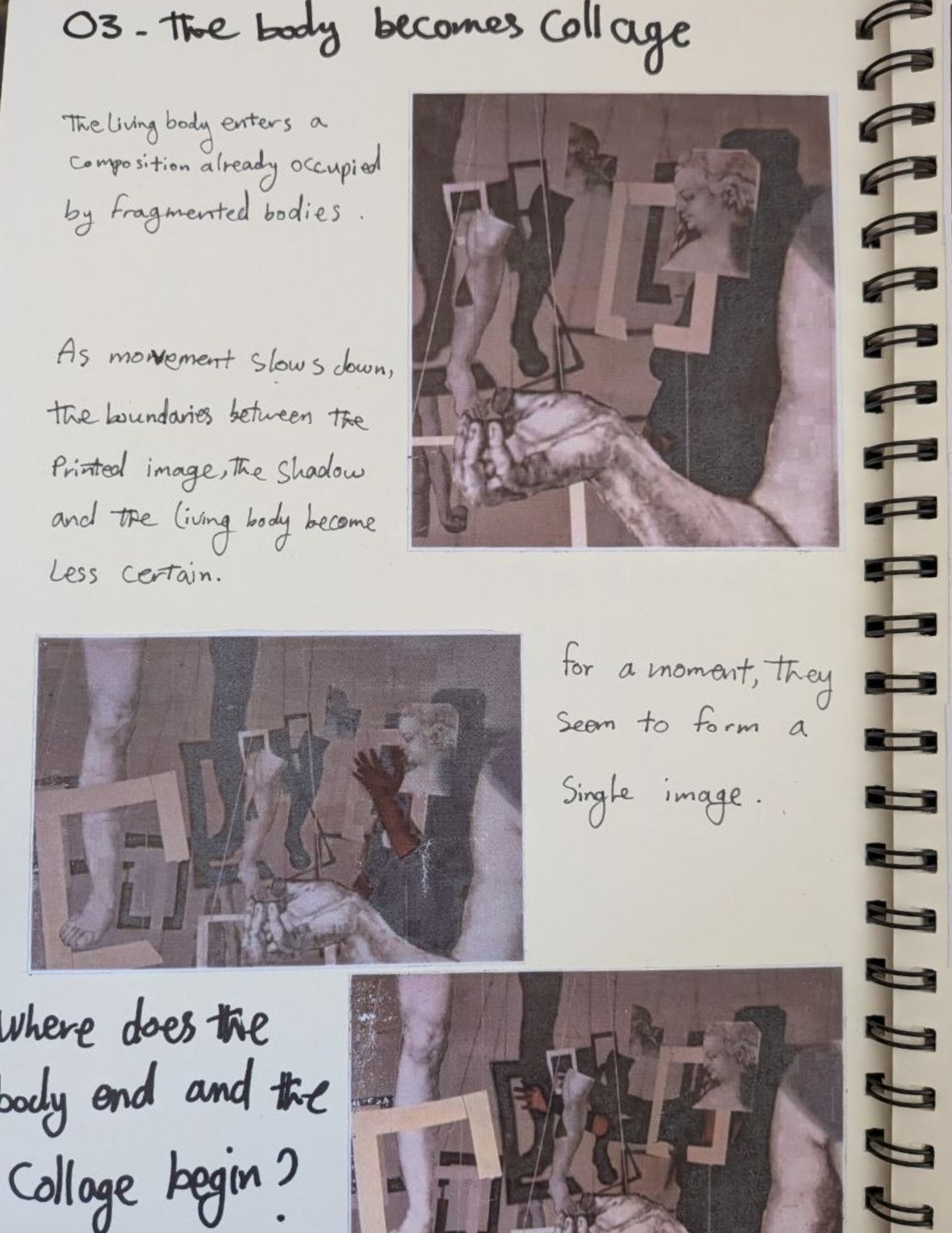
When I entered the installation again, my living body became part of a composition already occupied by fragmented images of other bodies.
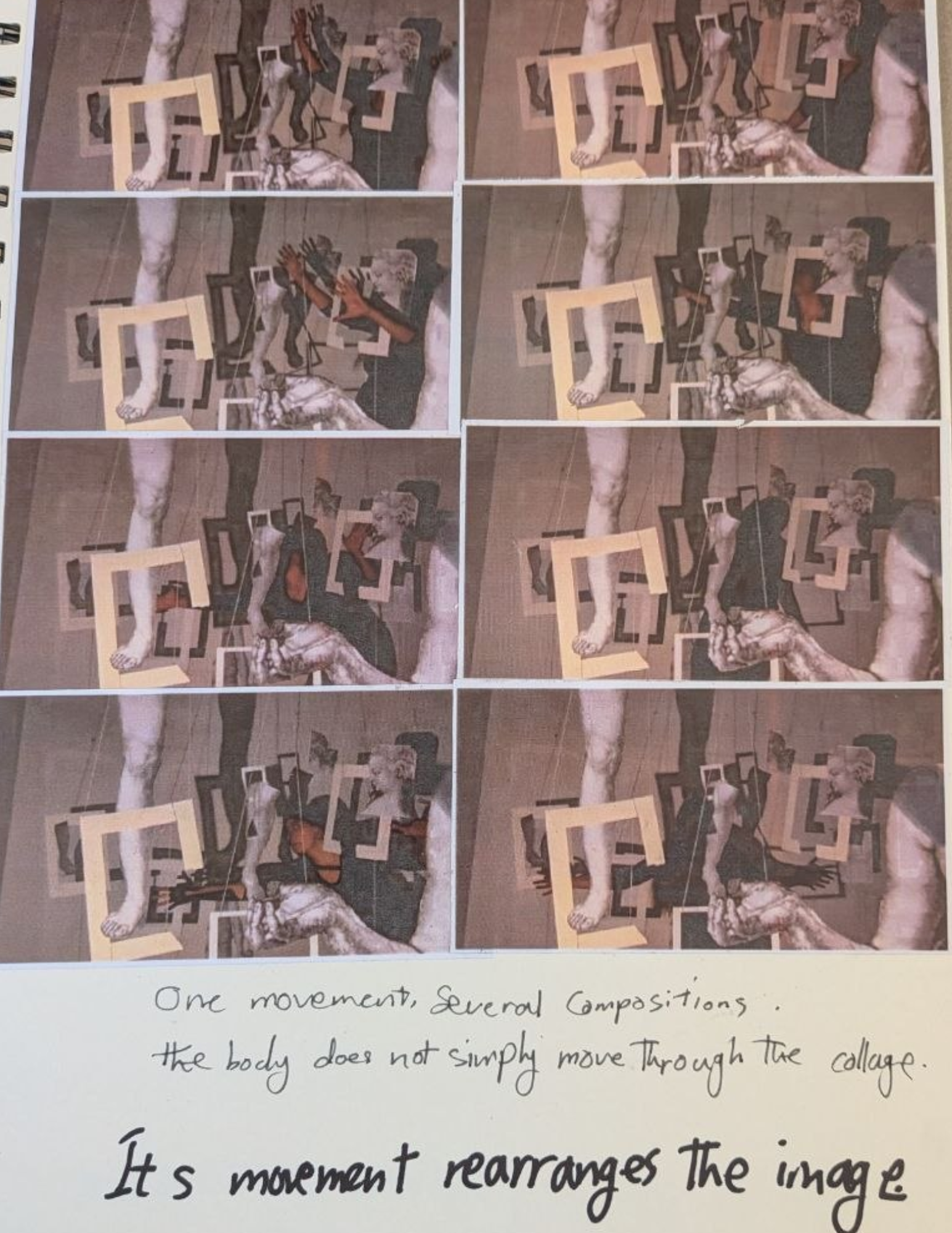
As I moved, my gestures and shadows sometimes connected separate fragments and sometimes interrupted them. Even when the printed images remained in place, a small movement could change the entire composition seen through the camera.
For a moment, my body, the historical images and their shadows seemed to form a single image. Then I moved, and that image changed again.
During this stage, I was also exchanging ideas with Yasamin Rashidi, whose practice in devised performance brought another perspective to my experiments with movement, bodily presence and the relationship between the body and the image.
Where does the body end and the collage begin?
Can a collage produce a narrative through movement?
Research Notebook - Looking Back at the Experiments
Unlike some of my earlier investigations, the notebook was not where this process began.
Most of these pages were made after the experiments, as I returned to the photographs and video stills to look more closely at what had happened.
Selecting, comparing and rearranging these images helped me notice relationships I hadn't necessarily seen while moving through the installation. Sometimes a single image raised a new question; sometimes a sequence suggested the next experiment.
The notebook became another space for looking again and questioning what had been recorded.
Reflection - Where the Research Led
I have worked with collage for a long time, but these experiments made me think differently about what it means to arrange fragments.
Here, the relationships between images were no longer fixed. They could change through movement, shadows, distance and the frame of a camera.
One of the moments that stayed with me was seeing my own body become part of the same image as the historical fragments of Eve, even though we belonged to entirely different times and representations.
It brought me back to the question that had led me here: if a story can be constructed from the traces someone leaves behind, what happens when those traces are rearranged? And can the body itself intervene in the story being told?
I don't have an answer yet. But these experiments have opened up new possibilities for thinking about collage, not only as a way of making images, but as a way of questioning how they construct meaning.
Continuing the Investigation
The research is now moving in two different directions, both through collaboration.
Refusal to Remain Still — Patriothall Gallery, Edinburgh
18–19 December 2026 | A collaborative work by Ayda Pakzad Afshar and Yasamin Rashidi
Building on the experiments at Cove Park and our ongoing conversations around movement and bodily presence, Yasamin and I are developing a new installation and performance together.
This will be a jointly conceived and created work, bringing my image-based and spatial research into dialogue with Yasamin's practice in devised performance.
Over two days at Patriothall Gallery in Edinburgh, we plan to explore how the living body, fragmented images and movement might shape changing compositions in the presence of an audience.
I am curious about what might happen when these experiments leave the studio and become a live, shared experience.
After She Leaves — STPLN, Malmö
26 February 2027 | In collaboration with Hoda Arbabi
Another direction takes me back to the traces left behind by an absent body, and how those traces become the material from which a story is told.
After She Leaves is a collaboration with Hoda Arbabi, whose practice focuses on writing and documentary theatre. We are developing a hybrid performative and visual reading, bringing together my visual research and Hoda's writing.
Hoda will participate in person at STPLN in Malmö, while I will join remotely.
Rather than recreating the spatial installation, I want to explore how the visual language emerging from this research might meet words, documents and performance, and what new questions might arise when we begin telling a story together.
Research and spatial experiments: Ayda Pakzad Afshar
Movement and performative research conversations: With Yasamin Rashidi
Research residency: Cove Park Autumn Micro Residency, 5–9 October 2026
Part of: The Coveration of Eve — When Eve Left the Scene
Related investigation: Refusal to Remain Visible
Related practice: Cove Park Autumn Micro Residency