The Coveration of Eve
A Research-Led Visual Practice
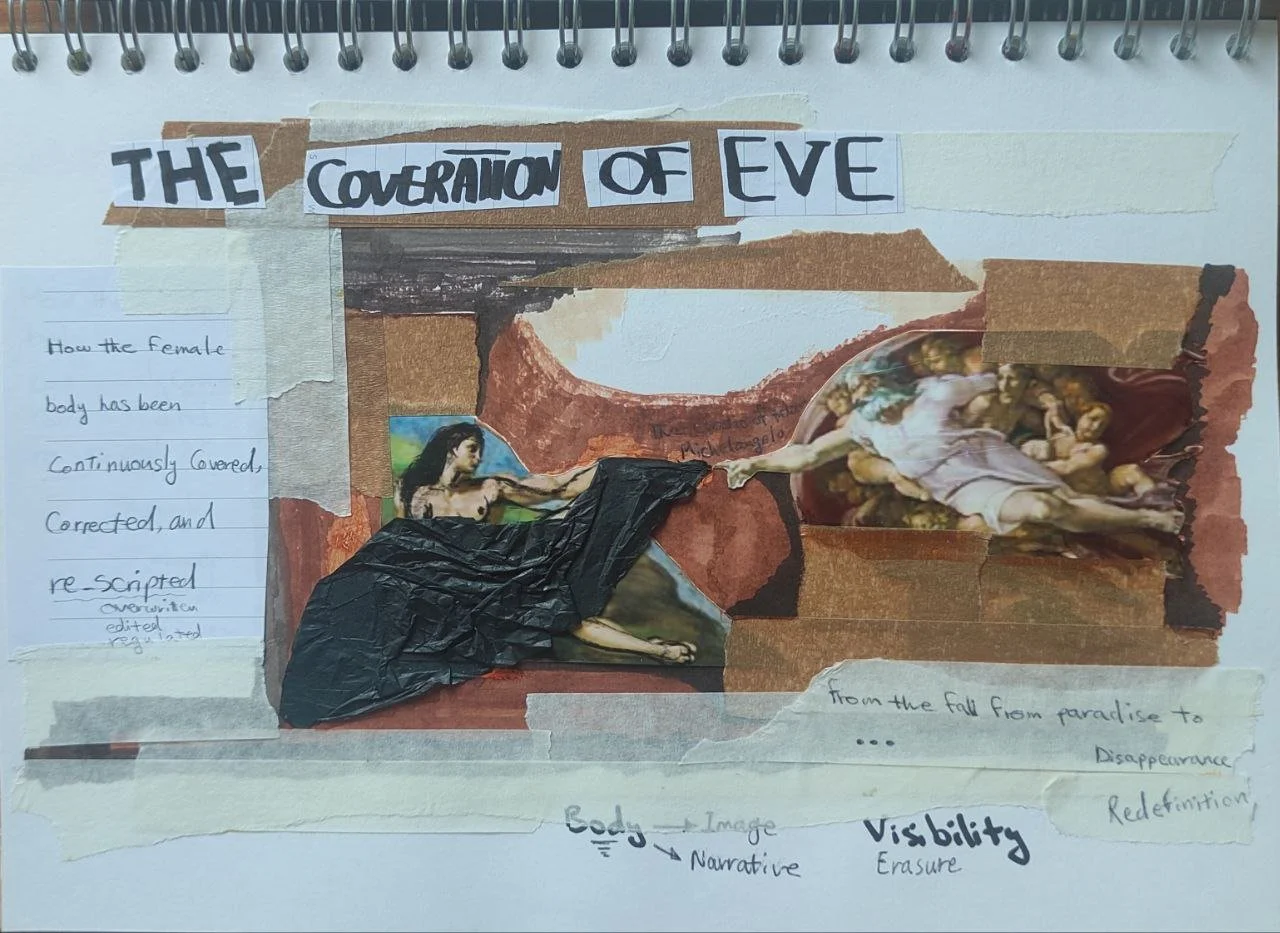
The Coveration of Eve is an ongoing, research-led visual practice exploring how systems of belief, culture, and power shape the visibility of the female body.
Working through collage, archival material, and image-based experimentation, the project traces how bodies are filtered, regulated, and reconfigured across historical and contemporary contexts.
Images are approached not as fixed artefacts, but as active visual systems, sites where visibility is continuously constructed, negotiated, and contested.
Conceptual Foundation
Positioning the body as a site of visibility, control, and resistance
The Coveration of Eve begins from the body, not as a neutral or stable entity, but as a site where systems of belief, culture, and power converge and operate.
The figure of Eve functions not as a fixed character, but as a shifting construct through which these forces become visible. Across different historical moments, the female body has been positioned, regulated, and reinterpreted through gestures of concealment, exposure, correction, and idealisation.
These gestures form a persistent visual language that continues to shape how bodies are seen, read, and controlled today. Rather than retelling these narratives, the project examines how they are constructed and maintained through images.
By focusing on the body as both surface and site, the work traces how visual codes are learned, repeated, and normalised, and how they might be interrupted. The project asks: what remains unseen even when the body is visible, and how can reworking images open space for resistance?
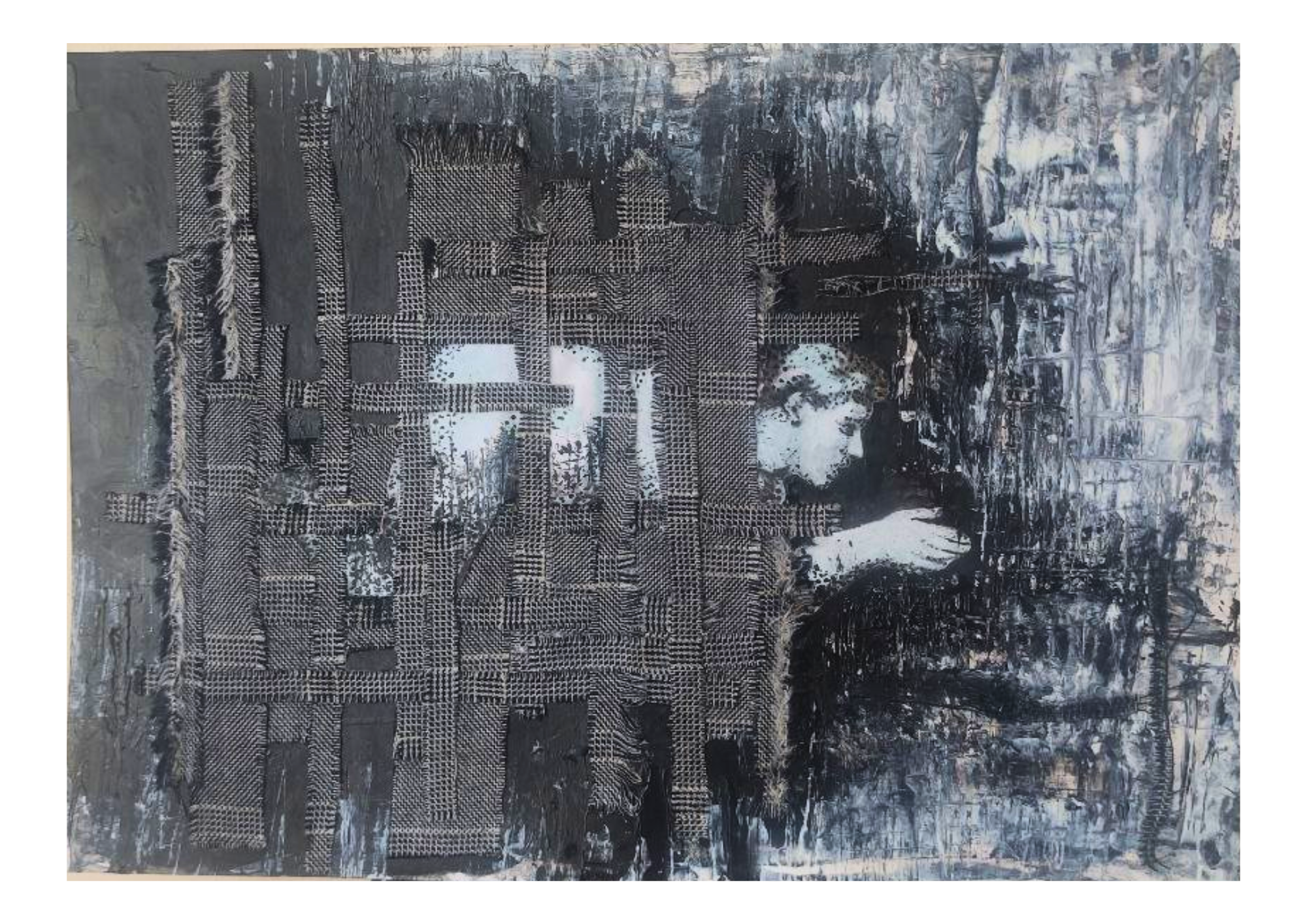
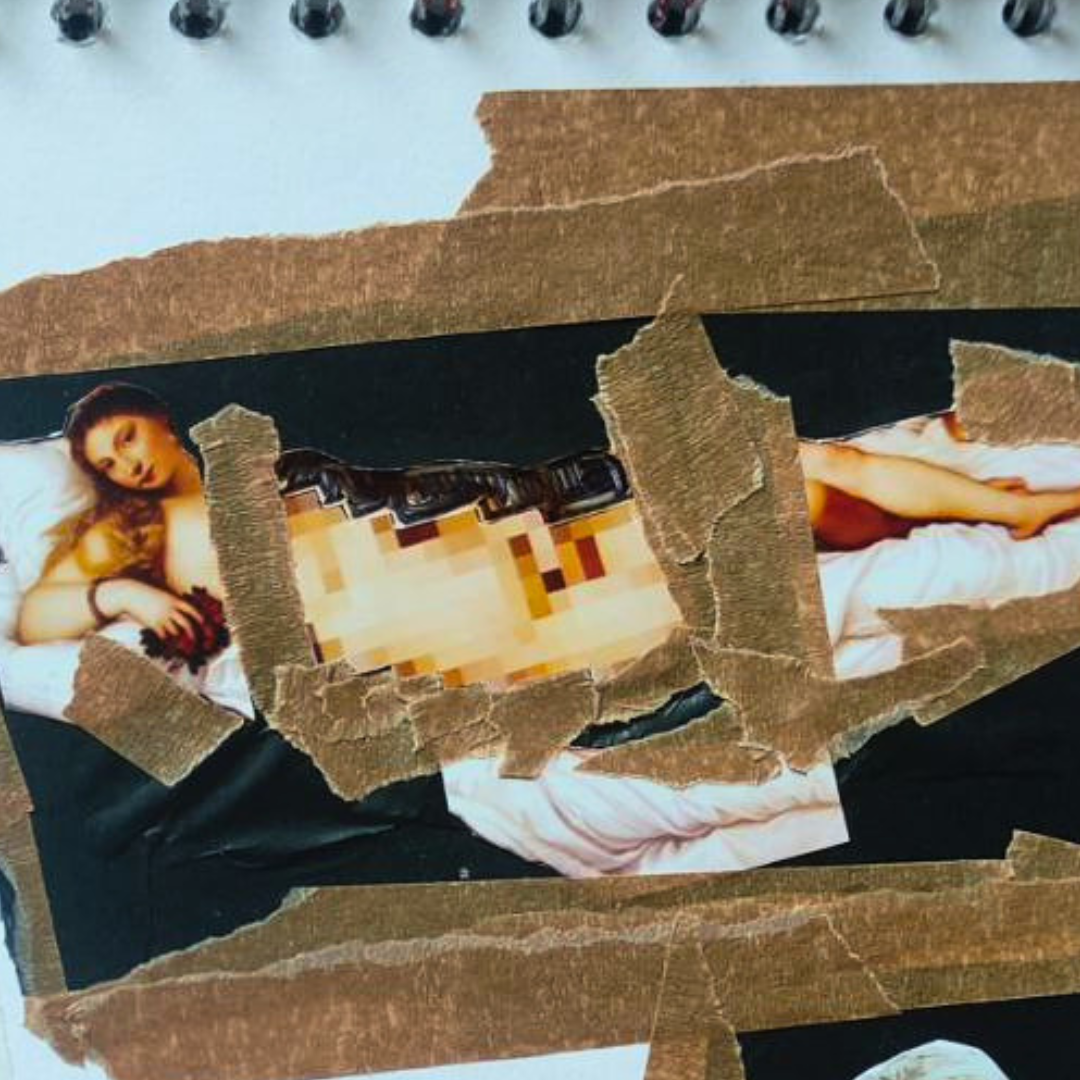
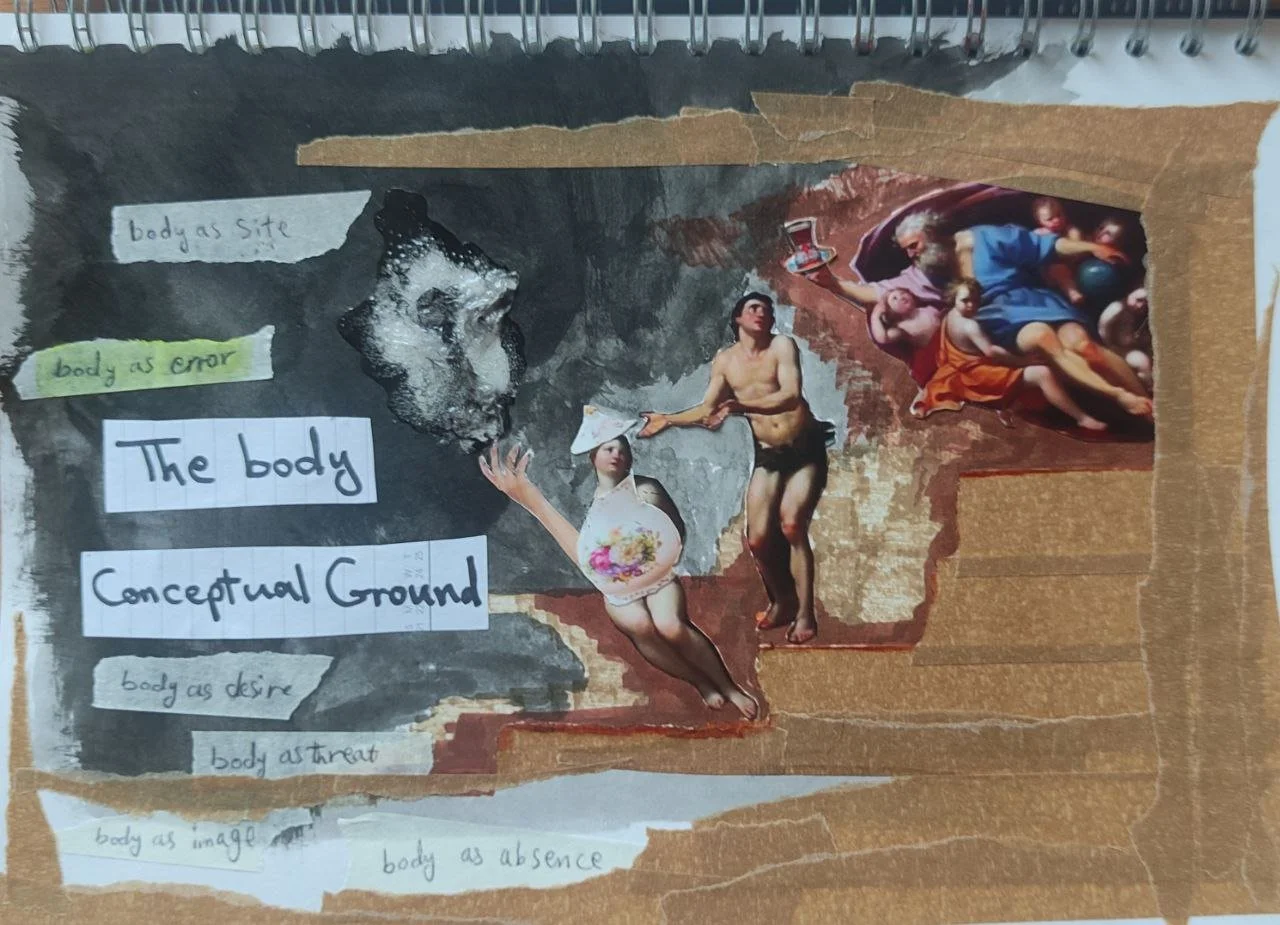
Visual research notebook 01: mapping the body as a conceptual ground
The body operates here not as an object of representation, but as a conceptual ground where visibility is negotiated.
Method & Process
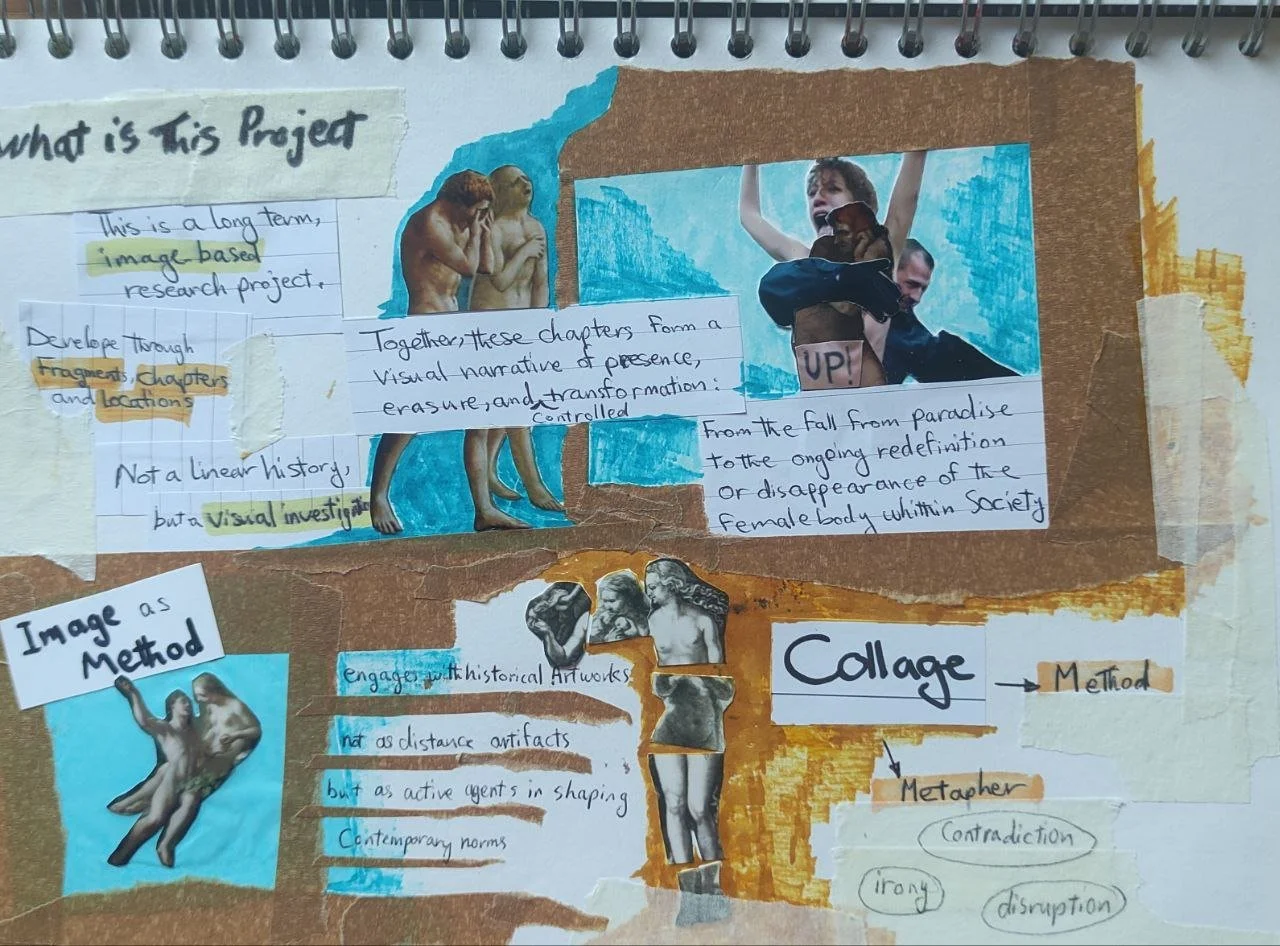
The project develops through a process that combines archival research, visual experimentation, and collage-based image-making. Historical and cultural images are approached not as static references, but as active visual systems that continue to shape how bodies are perceived.
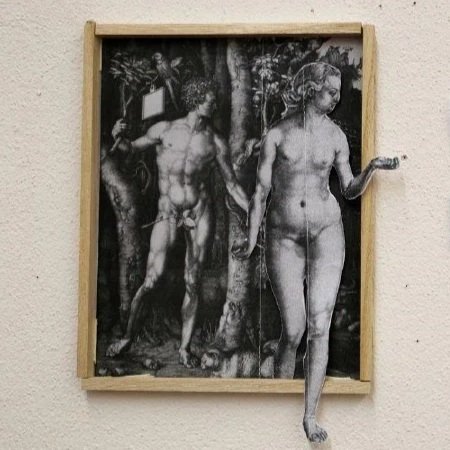
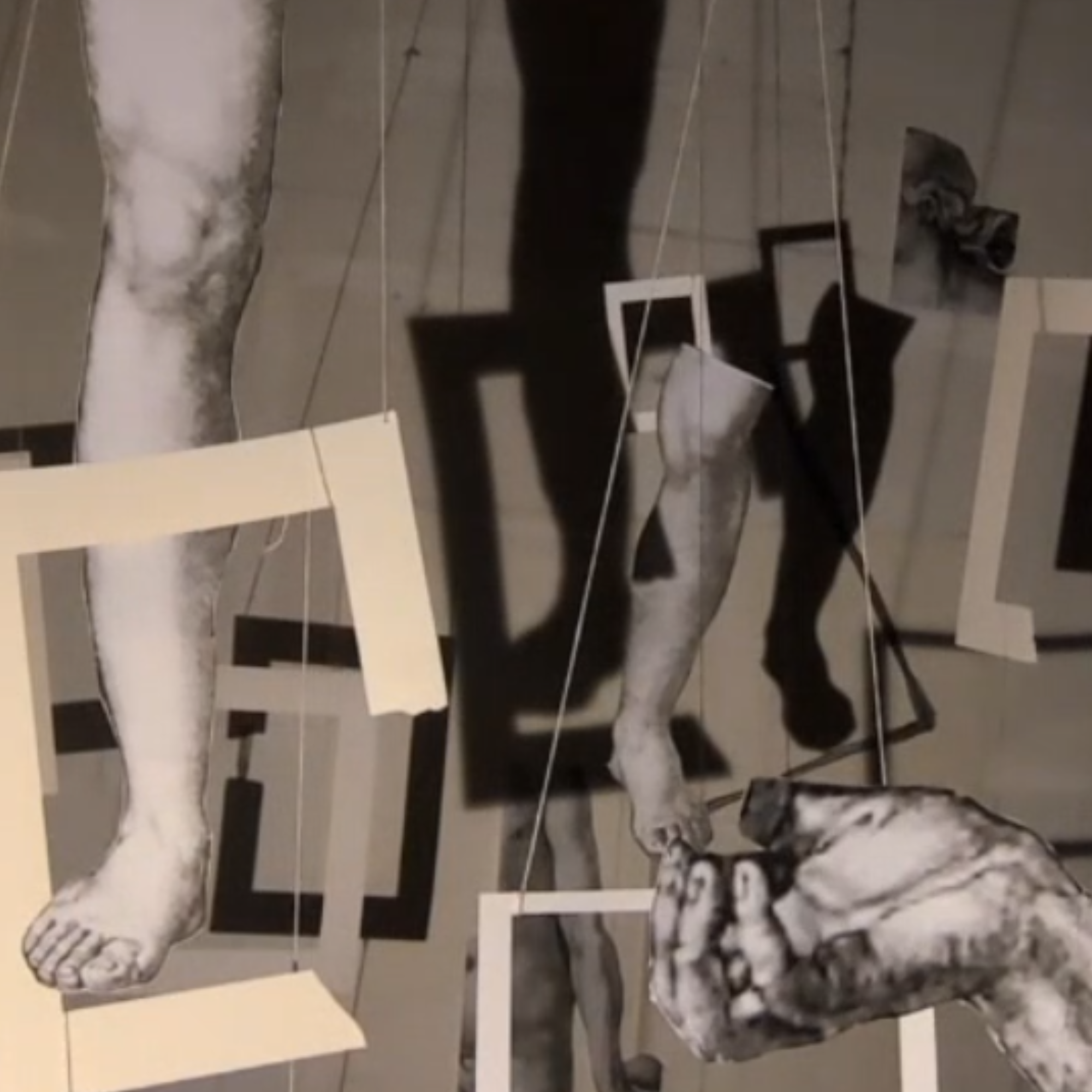
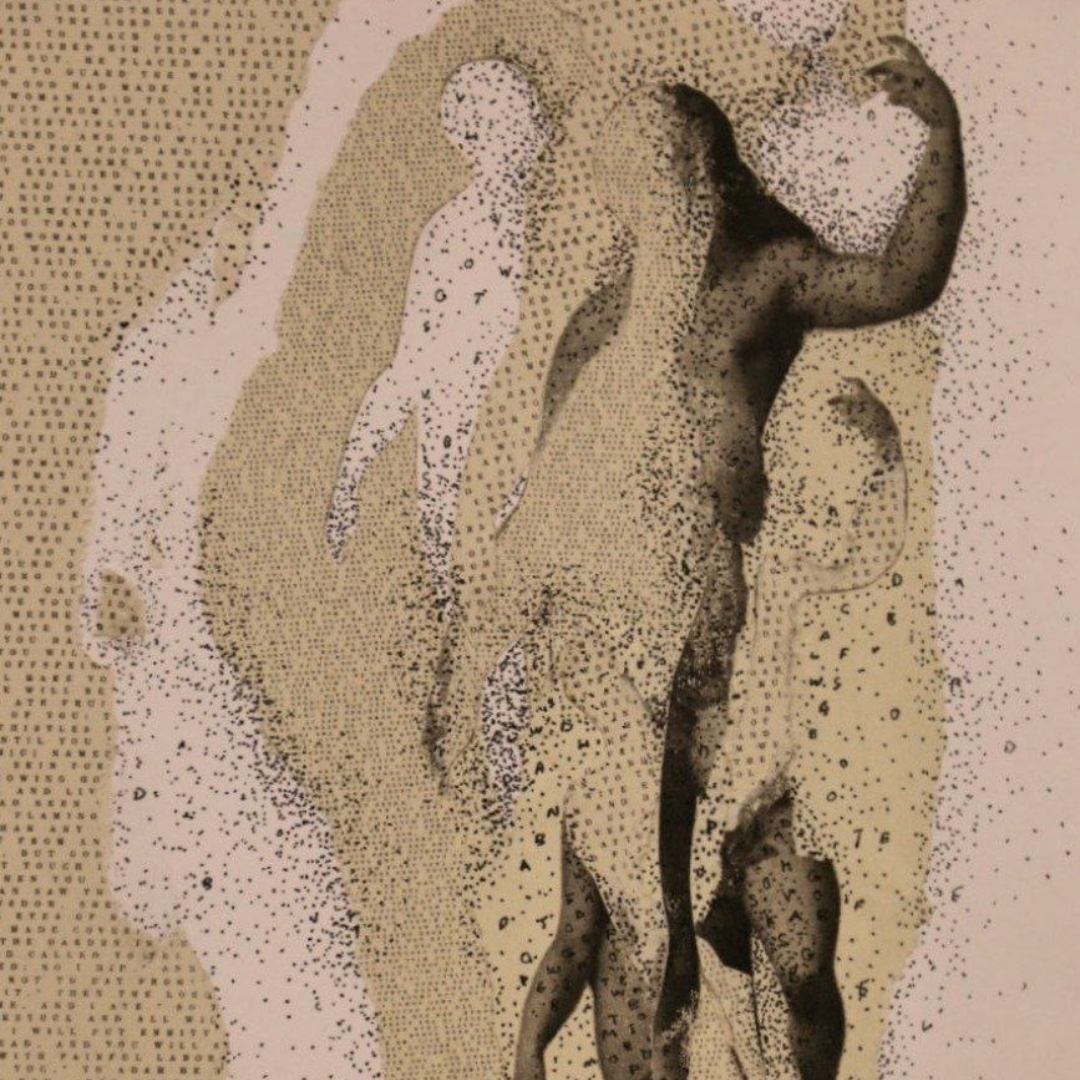
Through cutting, layering, obscuring, and reconstruction, images are reworked to expose the visual codes embedded within them. These interventions do not aim to produce resolved compositions, but to interrupt familiar ways of seeing and reveal the structures that organise visibility.
The visual research notebook functions as a central working space where fragments, notes, and image-based studies are brought together. It operates as a site of thinking through making, allowing ideas to develop through accumulation, repetition, and variation.
Rather than following a fixed sequence, the process remains open and responsive. Each micro chapter emerges from a specific context, activating different aspects of the project’s conceptual framework.
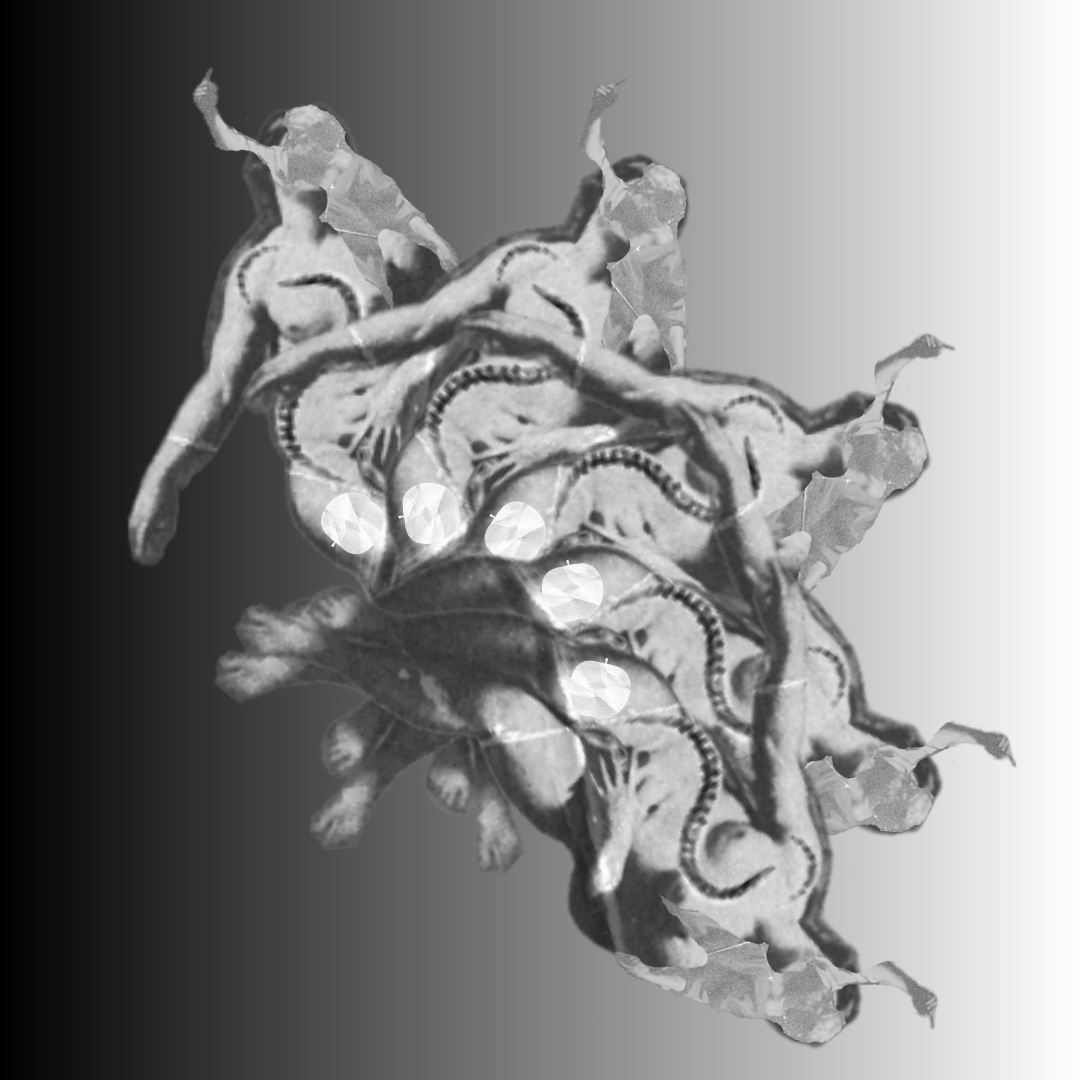
Collage as method: fragmentation, layering, and reconstruction
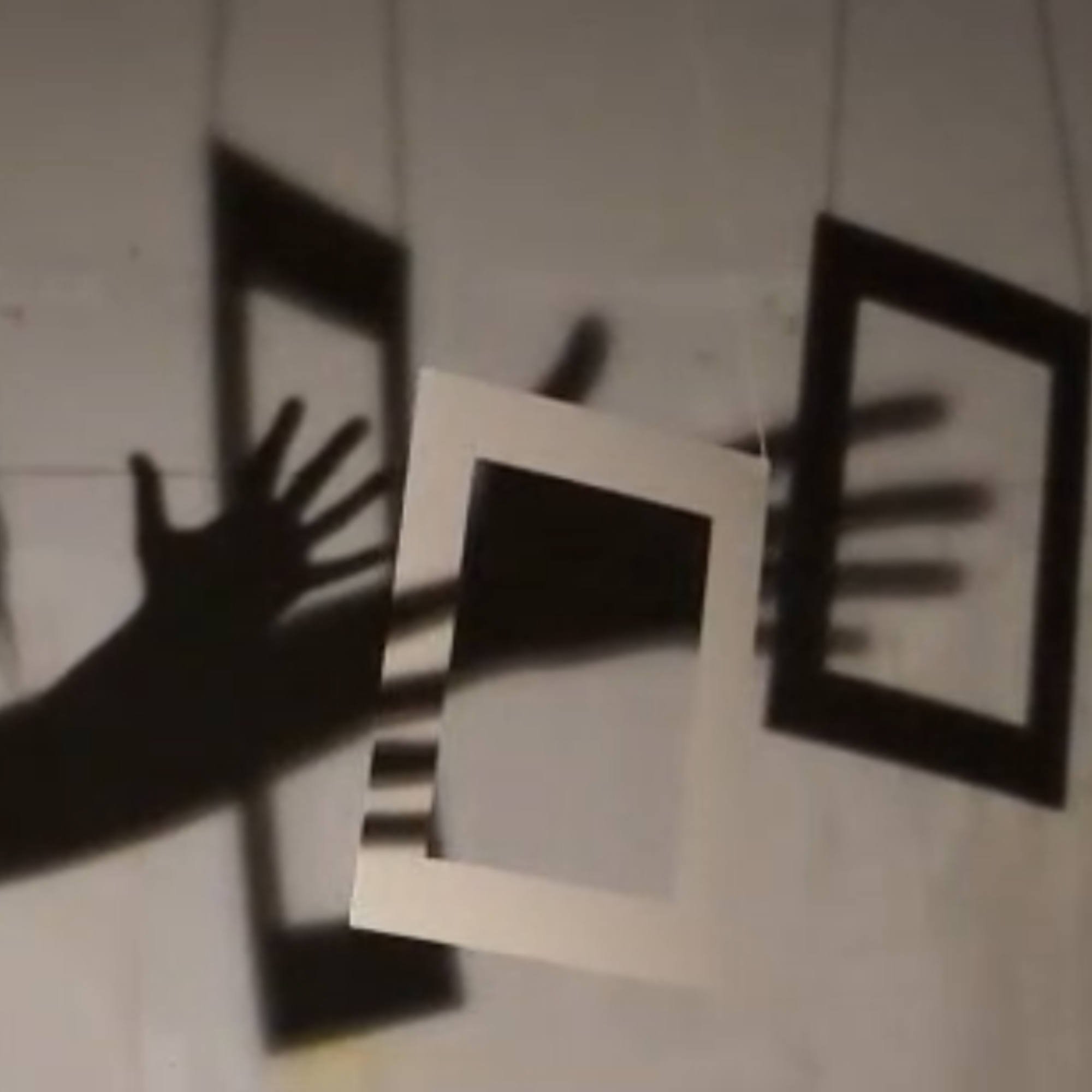
The process itself becomes a method of inquiry, where making and thinking remain inseparable.
Structural Framework
The Coveration of Eve is structured through a series of interconnected conceptual mechanisms that examine how the visibility of the body is constructed and regulated.
These mechanisms do not function as fixed categories, but as overlapping frameworks that allow different aspects of the project to be activated across contexts.
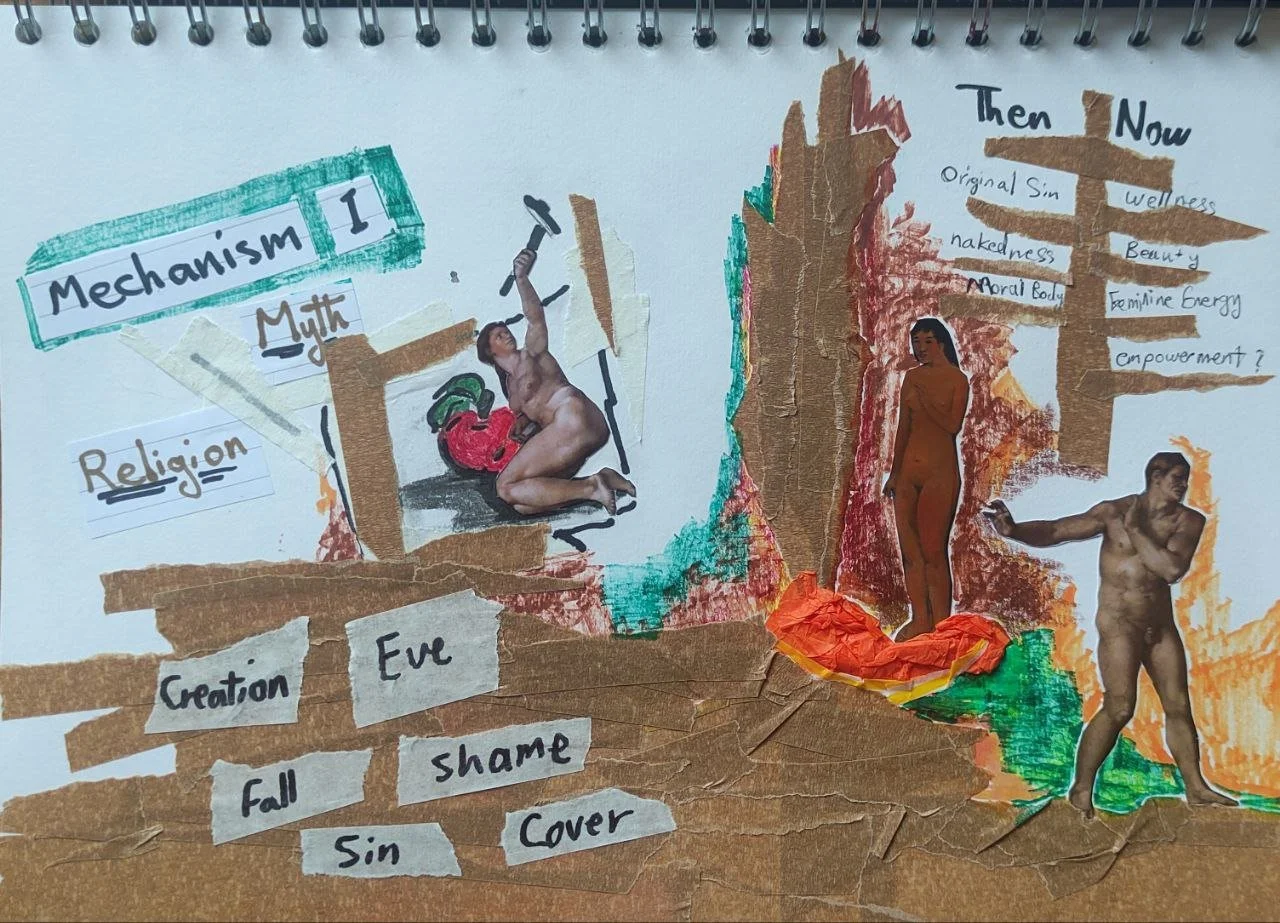
1. Myth & Belief
This mechanism explores how systems of belief shape the perception of the body.
Rather than focusing solely on historical mythologies, it also considers how contemporary narratives, such as ideals of beauty, empowerment, and identity, function as modern myths that continue to define and regulate visibility.
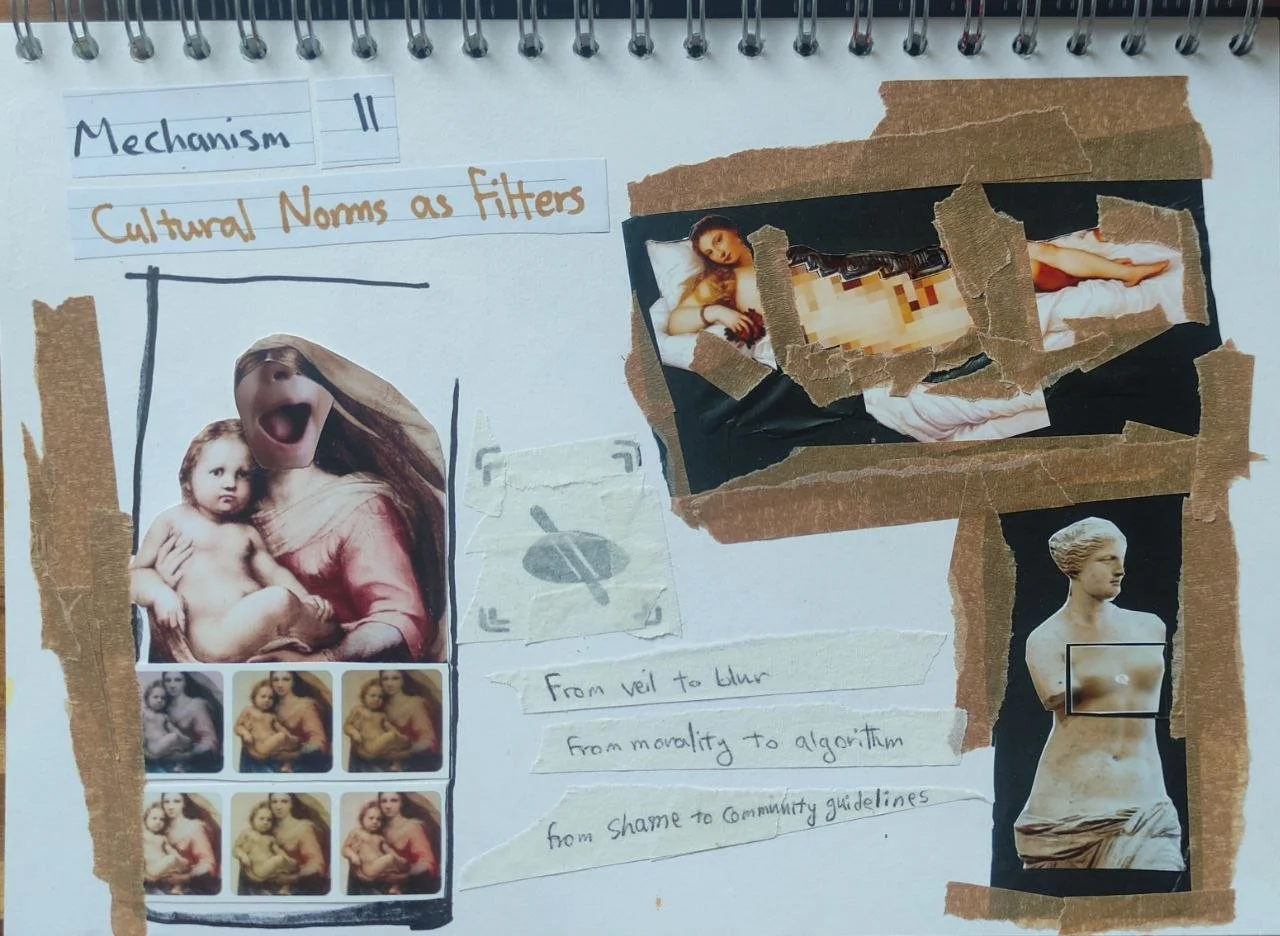
2. Cultural Norms as Filters
Here, the body is examined through the lens of social and cultural frameworks that determine what can be seen, shown, or concealed.
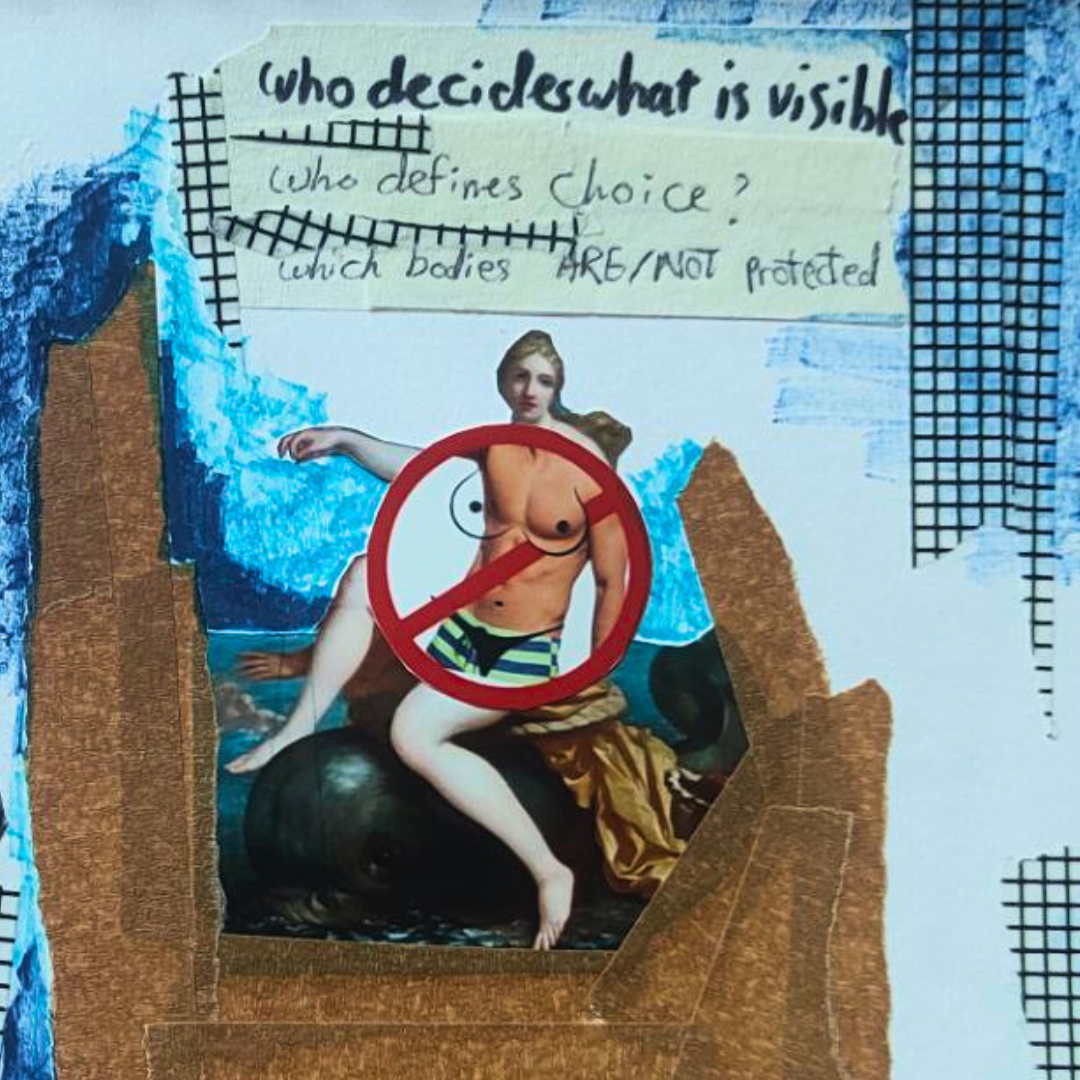
In contemporary contexts, these filters extend into digital environments, where algorithmic moderation, community guidelines, and platform structures actively shape visibility.
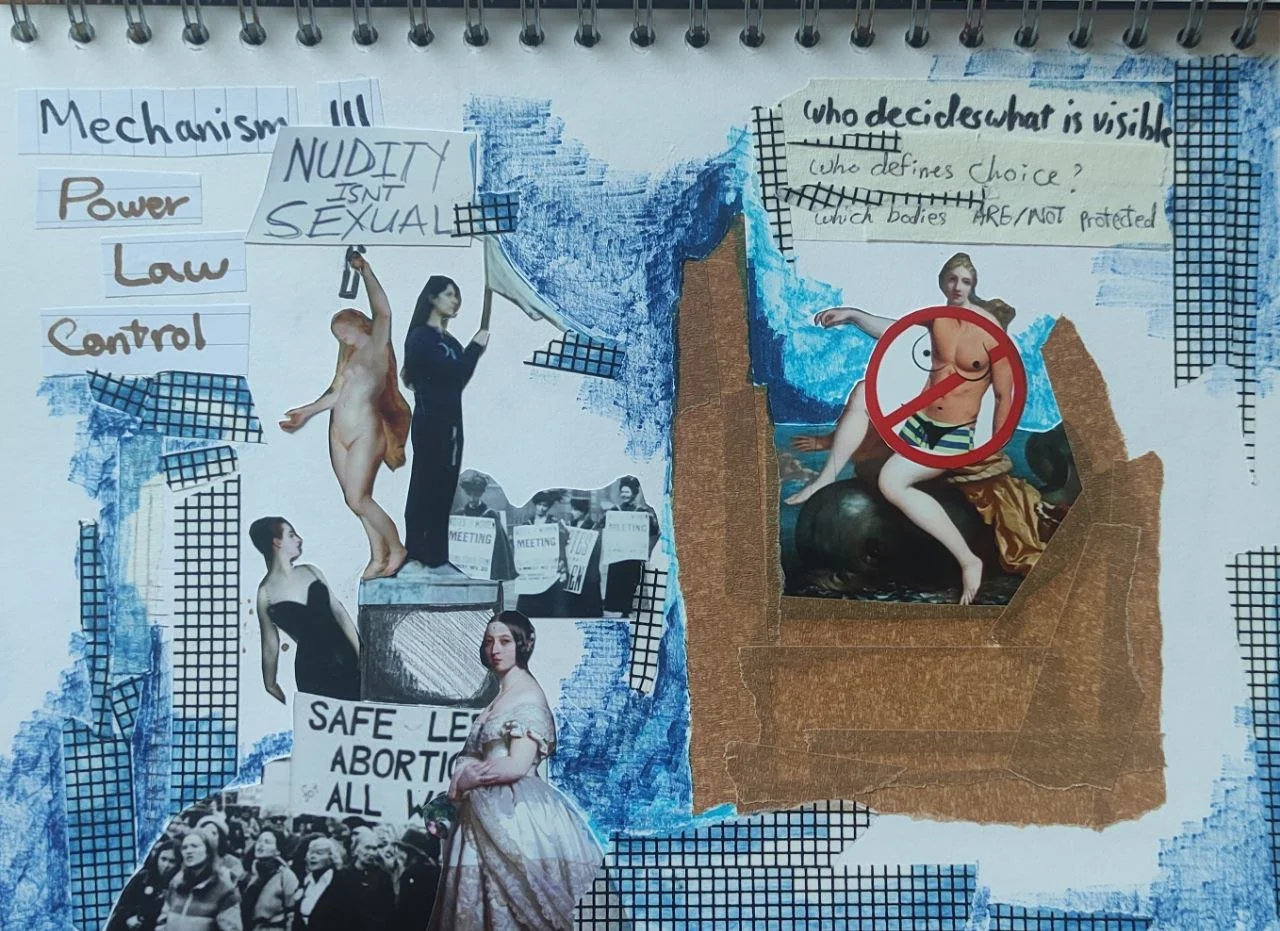
3. Power, Law & Control
This mechanism focuses on how legal, political, and institutional systems govern the body.
It examines how visibility is regulated through authority, restriction, and resistance, and how the body becomes a site of negotiation within these structures.
Each chapter and micro chapter emerges through one or more of these mechanisms, allowing the project to remain flexible while maintaining a coherent conceptual structure.
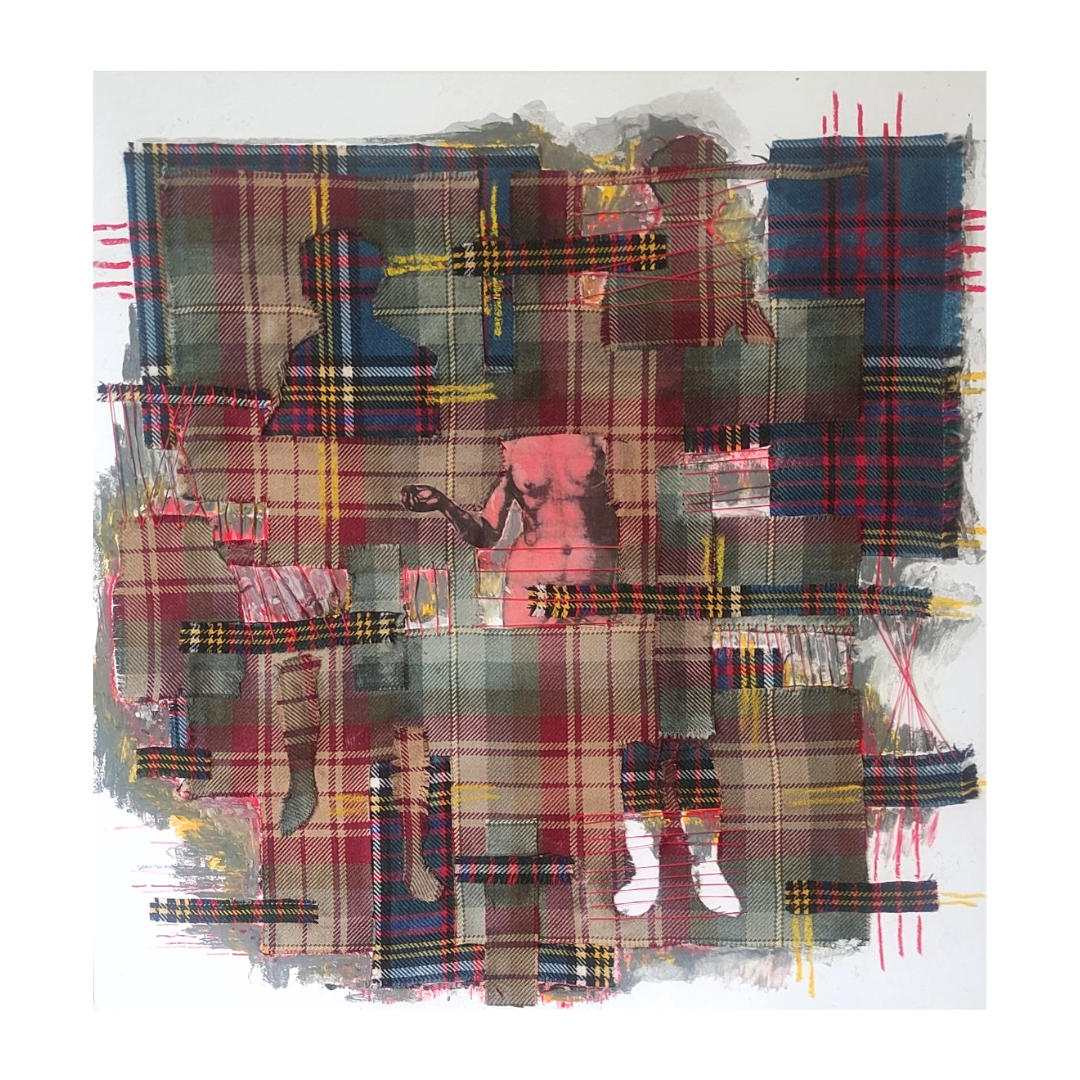
Project development map: relationships between mechanisms, chapters, and visual processes