Acceptable Visibility
Line of Inquiry
Cultural Norms, Visual Filters, and Image Culture
Introduction
Visibility is often imagined as a simple act of being seen. I approach it differently.
Before a body appears in the world, it has already learned countless visual lessons: how to stand, how to dress, how much to reveal, what confidence looks like, what modesty looks like, even what feels appropriate to share.
Most of these lessons are never spoken. They are learned through images.
Paintings, museum collections, fashion, cinema, advertising, family photographs, Instagram, TikTok, platform moderation, beauty tutorials, together they form a visual culture that quietly teaches bodies how to appear.
Acceptable Visibility explores these visual systems, asking not only what they show, but what they repeatedly make visible, acceptable, and familiar.
Central Question
How do cultural and social norms become visual systems that teach bodies how to appear?
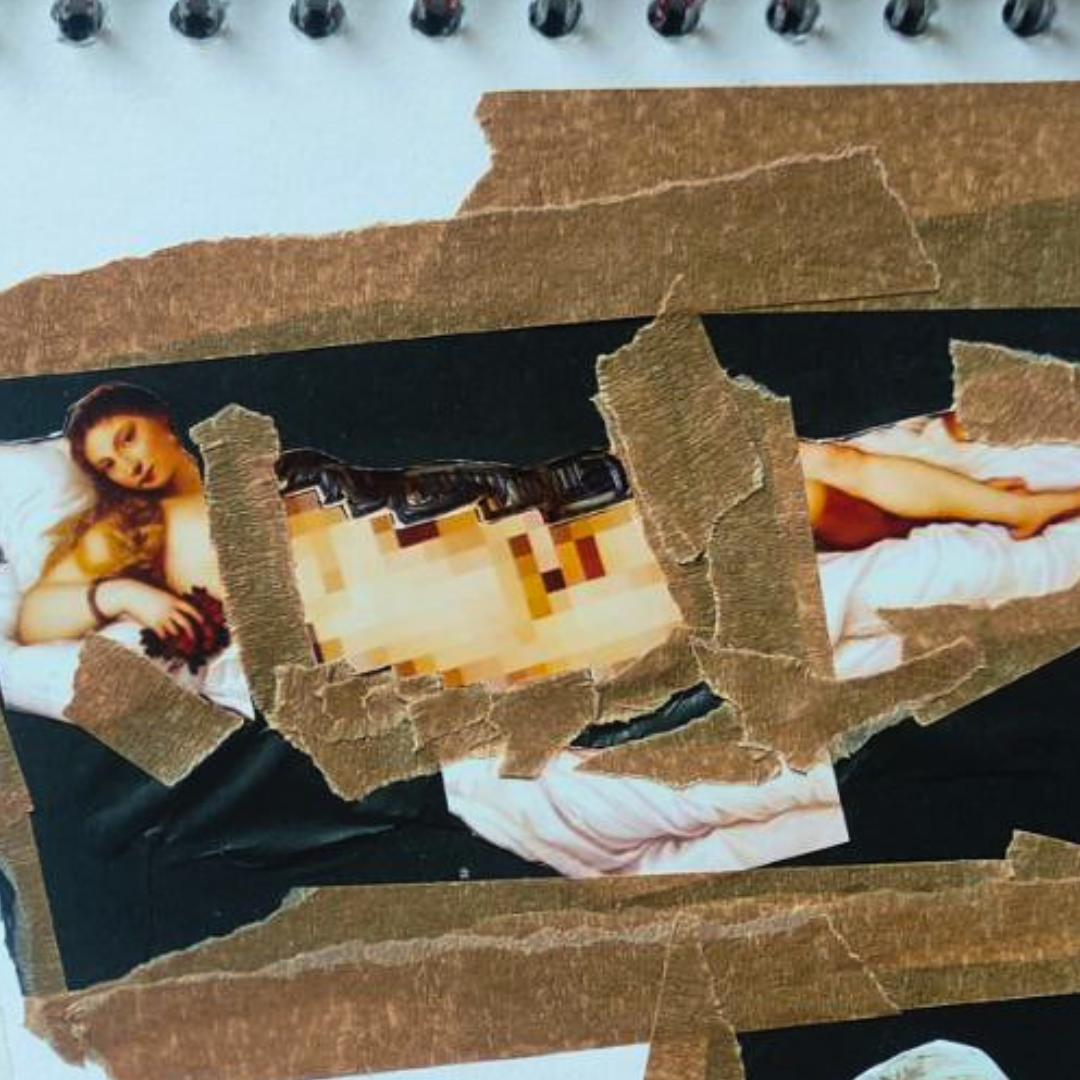
Early collage study investigating the visual construction of acceptable visibility.
About this Line of Inquiry
Images do more than document culture. They participate in shaping it.
Certain gestures return across centuries. Certain poses remain recognisable. Certain ways of looking, dressing, smiling, covering, or exposing the body continue to feel strangely familiar, even when their original context has disappeared.
I'm interested in that continuity.
Rather than separating historical images from contemporary media, I see them as parts of the same visual ecosystem. A Renaissance painting, a nineteenth-century photograph, an Instagram post, and a beauty campaign may belong to different moments in history, but they can still teach remarkably similar lessons about how a body should appear.
This line of inquiry brings together art history, visual archives, digital culture, and collage to examine how these visual expectations are constructed, and how they might be interrupted.
Research Directions
Art-historical modesty
Canonical representations of women
Museum collections
Image archives
Fashion and self-adjustment
Poses and gestures
Social media filtering
Platform moderation
Beauty culture
Learned visibility
Current Investigation: Concept Development
This research is currently focused on building the conceptual framework for the line of inquiry while mapping visual connections between historical image traditions and contemporary image culture.
The first research context develops through museum collections, historical archives, and visual material gathered for the Creative Scotland proposal centred on Edinburgh.
Counter-Archive in Progress
The counter-archive is developing through collecting, rearranging, and questioning images rather than preserving them.
Historical paintings sit next to screenshots. Fashion photography meets religious iconography. Cropped bodies, repeated gestures, visual notes, and collage fragments begin forming an archive that asks different questions from the one it was taken from.
Instead of asking what these images represent, the archive asks what they repeatedly teach.
Current Outputs
Concept development
Edinburgh research proposal
Archive mapping
Visual references
Digital collage studies
Research notes
Project Manifestations
Edinburgh Museum and Archive Research
Originally developed as a proposal for Creative Scotland, this project investigates museum collections and historical image archives as living visual systems rather than historical records.
It provides the first research context for Acceptable Visibility and will continue to evolve through future archive research, visual notebooks, publications, and exhibitions.
Research Archive
Current investigations connected to this line of inquiry will gradually appear here.
Acceptable Visibility is not simply about images of women.
It is about the visual education of the body: the slow accumulation of images that teach us how to appear long before we realise we have learned them.