When Eve Left the Scene
Line of Inquiry:
Withdrawal, Opacity, Refusal, and Departure
Introduction
When Eve Left the Scene begins with a different reading of departure: what if Eve did not simply fall or get expelled, but chose to leave?
This line of inquiry looks at leaving as an act of choice and refusal, choosing not to remain within a role, image, or frame that has already been decided. From there, the research follows what happens when the body tries to leave, and what remains after it has gone.
Central Question
What happens when a body chooses to leave the image?
And what remains after it has gone?
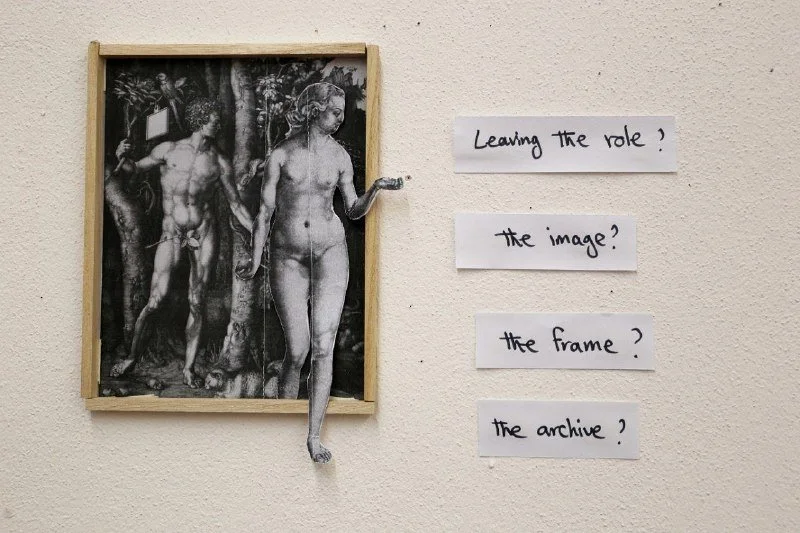
Collage study. Hospitalfield Interdiciplinary Residency- August 2026
About this Line of Inquiry
When Eve Left the Scene considers departure not as disappearance, failure, or loss, but as a possible act of agency. Beginning with Eve, it asks what changes when leaving is understood as a decision rather than a punishment.
The research moves through the relationships between body, role, image, frame, and visibility. It asks whether a body can ever fully leave the structures through which it has been seen, and what happens to its image once the body itself is no longer present.
As the inquiry develops, absence becomes another site of representation. Traces, descriptions, memories, and records can continue to make the absent body visible, raising questions about who constructs the narrative that remains, and whose version of leaving becomes part of the archive.
Current Investigation
Refusal to Remain Visible
Hospitalfield Interdisciplinary Residency - August 2026
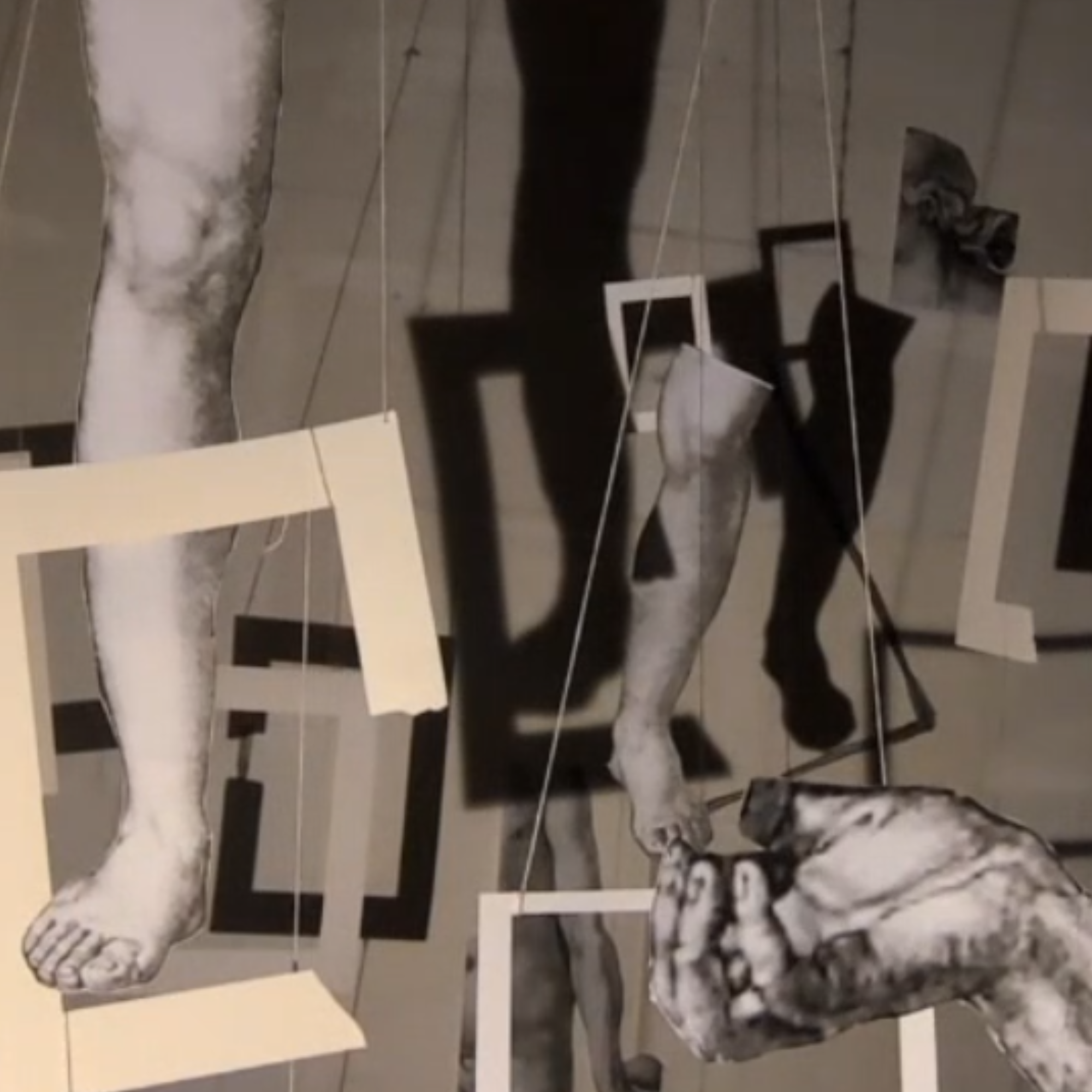
Developed during the Hospitalfield Interdisciplinary Residency, Refusal to Remain Visible began by exploring leaving as an act of choice and refusal: what if Eve chose to leave rather than simply being expelled?
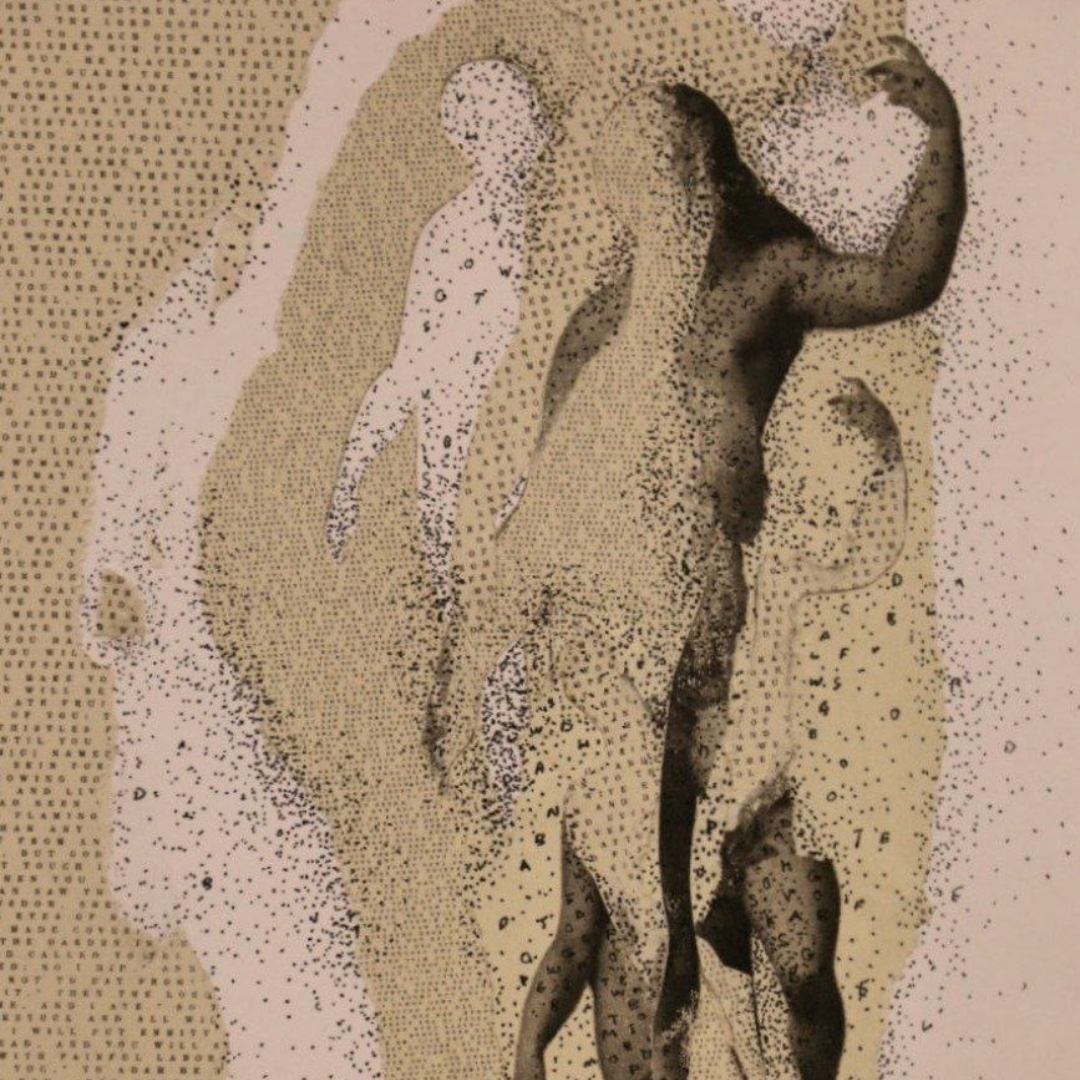
Through a visual research notebook, an evolving studio wall, collage, and spatial experiments with frames, the investigation moved through questions of role, image, threshold, frame, and visibility. What began as a question about leaving gradually became a question about what remains after the body has gone.
Investigations
When Eve Left the Scene develops through a series of connected investigations, each approaching leaving, visibility, and absence from a different position.
Where the Research is Moving
Can a body leave an image without leaving a story behind?
And if a story remains, whose story is it?
The first phase of Refusal to Remain Visible began with the act of leaving, but gradually shifted towards what remains after departure. If the body is no longer there, its absence can still be described, recorded, interpreted, and turned into a narrative.
This is beginning to move the research towards archives of absence, and towards the gap between the person who left and the version of her that remains in the archive.
One possible direction for the next stage is to look at historical records surrounding women who left, including records of runaway wives, and ask what these archives preserve, what they omit, and whose account of leaving survives.
Perhaps disappearance is not the opposite of visibility.
Perhaps it is another way of negotiating it.
When Eve Left the Scene is less interested in recovering what has been lost than in asking what becomes possible once the body is no longer required to remain inside the image.